
Photography is entering a new era where cameras think, learn, and create like never before. AI Photography and AI camera technology are transforming everything—from capturing the perfect shot to editing images automatically in just a few seconds 15 Future Trends in AI Camera Technology and AI Photography Revolutionizing the Photo Industry.
As Artificial Intelligence continues to evolve, photographers, brands, and creators are shifting towards smarter imaging solutions that improve workflow, reduce costs, and unlock limitless creative possibilities.
Below are the 15 most exciting future trends shaping the world of AI-powered photography 15 Future Trends in AI Camera Technology and AI Photography Revolutionizing the Photo Industry.
1️⃣ AI-Powered Auto-Enhancement
Photography has come a long way from the days of film rolls and manual darkroom edits. Today, Artificial Intelligence has become the invisible assistant behind almost every image we capture — especially through AI-powered auto-enhancement. This technology is quietly redefining what it means to take a “perfect” photo. Whether you’re using a smartphone, DSLR, or mirrorless camera, AI is now stepping in to optimize brightness, balance colors, sharpen details, and bring every shot closer to professional quality — instantly and effortlessly AI Photography .
So, what exactly is AI-powered auto-enhancement, and how is it changing photography? Let’s explore this revolutionary trend AI Photography more to know click here https://autoenhance.ai/
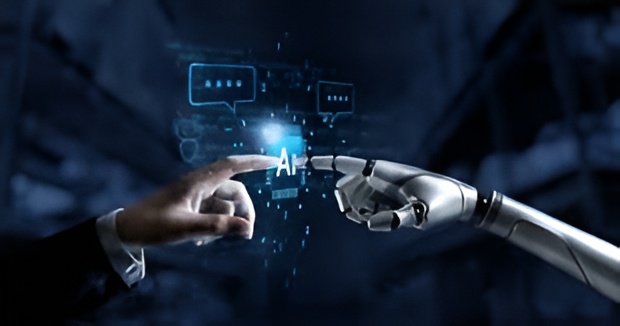
What Is AI Auto-Enhancement?
AI auto-enhancement refers to machine learning algorithms that analyze an image and improve it automatically without needing user intervention. These systems are trained on millions of diverse photos, learning what visually appealing images look like — from skin tones to landscapes to night photography AI Photography .
AI enhancement can detect:
✅ The scene type (portrait, landscape, food, pets, buildings, etc.)
✅ Lighting conditions (high contrast, low light, backlit subjects)
✅ Key subjects in the frame (faces, sky, eyes, objects)
Once detected, the AI adjusts the photo to its best version — within a second AI Photography .
How Does AI Auto-Enhancement Work?
The process involves multiple layers of intelligent corrections:
📌 Color Correction – Matches colors to real-life tones; enhances vibrancy without oversaturation
📌 Brightness & Exposure Adjustment – Balances shadows and highlights for clarity
📌 Sharpness Improvement – Enhances textures and edges while reducing blurriness
📌 Noise Reduction – Cleans up grainy photos, especially at night
📌 Detail Recovery – Restores lost data using predictive AI models
📌 Face Retouching – Smooths skin, brightens eyes, and maintains natural look
All of this happens automatically — often before you even open the gallery.
Why Is AI Auto-Enhancement So Important Today?
People want high-quality images, but not everyone wants to manually edit them. AI enhancement saves time while giving great results. And let’s be honest — most users don’t know how to adjust ISO, white balance, or tone curves AI Photography.
AI is becoming the silent editor that ensures:
📷 Every capture is worth keeping
📷 Social media images look polished
📷 Photographers spend less time editing
📷 Memories are preserved beautifully
This tech democratizes photography — making good images accessible even to beginners AI Photography.
AI Auto-Enhancement in Smartphones
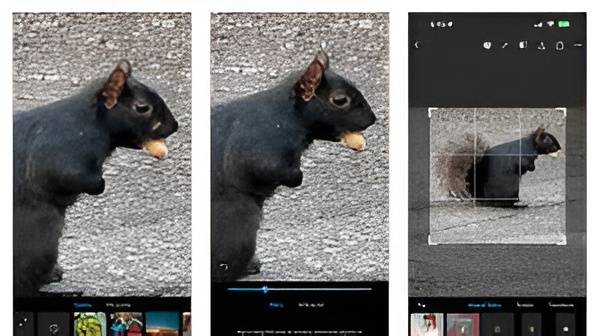
Smartphones have become the biggest beneficiaries of this innovation.Brands like Google, Apple, Samsung, and Xiaomi now rely more on computational photography than traditional sensors. Even if the hardware is average, AI can transform the final shot — turning a basic camera into a pro-level performer Brands like Google, Apple, Samsung, and Xiaomi now rely more on computational photography than traditional sensors. Even if the hardware is average, AI can transform the final shot — turning a basic camera into a pro-level performer AI Photography.
.
Example features:
- Smart HDR merges multiple shots for perfect highlights and shadows
- Portrait Mode uses AI depth mapping for natural background blur
- AI Beautification retains realistic skin texture (no more over-smoothing)
- Night Mode brightens dark scenes without losing detail
Your phone is not just capturing a picture — it’s processing thousands of calculations in microseconds.
Impact on Professional Photographers
Some worry AI automation might replace editing skills — but the reality is encouraging:
✨ AI speeds up workflow
✨ Photographers can focus more on creativity
✨ Consistent results are easier to maintain
✨ Quick delivery improves client satisfaction
Instead of replacing professionals, AI becomes their creative partner AI Photography.
Many photographers now start with AI-enhanced edits and refine them with tools like Lightroom or Photoshop AI Photography.
AI Auto-Enhancement in Video & Real-Time Capture
The evolution doesn’t stop at photos AI Photography.
AI now enhances:
🎥 Live video exposure + stabilization
🎥 Real-time face tracking & focus
🎥 Autoframe and cinematic blur
Even low-budget content creators can achieve film-like quality AI Photography.
Benefits of AI Auto-Enhancement
| Feature | User Benefit |
|---|---|
| Automatic improvements | Saves editing time |
| Smart recognition | Better results for every scene |
| Consistent quality | Fewer bad shots |
| Real-time enhancement | Perfect photos instantly |
| Noise + blur reduction | Low-light performance improves |
It turns everyday photography into something extraordinary.
Challenges & Concerns
Despite the excitement, AI auto-enhancement faces criticisms:
⚠️ Over-processed images may look unnatural
⚠️ Loss of artistic originality
⚠️ Privacy concerns when analyzing faces
⚠️ Dependence on algorithms over skill
The challenge will be balancing automation with authenticity AI Photography.
Future of AI Auto-Enhancement
In coming years, expect:
🚀 Emotion-based enhancement — adjusting images based on mood
🚀 AI style transfer — copying famous photographer aesthetics
🚀 Personalized enhancement profiles — tailored to your taste
🚀 Real-time 3D enhancements for AR photography
🚀 Better RAW processing using deep learning models
The camera of the future might know what you want before you click the shutte AI Photography.
✅ Final Thoughts
AI-powered auto-enhancement isn’t just a feature — it’s a revolution. It gives beginners access to professional-quality results and provides experts with tools that accelerate creativity. As AI continues to learn from millions of photos, the gap between amateur and pro photography is rapidly closing AI Photography.
One thing is clear:
✨ The future of photography will be more automated, more intelligent, and ultimately… more beautiful. ✨.
2️⃣ Real-Time Object Recognition
AI will understand what you’re photographing—faces, food, pets, landscapes—and adjust settings for the best results automatically
Photography is no longer just about clicking a button. Modern cameras are becoming deeply intelligent — thanks to real-time object recognition powered by Artificial Intelligence. Instead of you adjusting shutter speed, exposure, or focus, the camera itself learns to understand the world in front of the lens. Within milliseconds, it can identify whether you’re shooting a smiling face, a cup of latte, a jumping dog, or a stunning sunset — and automatically applies the most flattering enhancements.
This incredible ability is shaping the future of AI photography and transforming the way we capture memories. Let’s explore how it works and why it’s such a game-changer AI Photography.
✅ What Is Real-Time Object Recognition?
Real-time object recognition is an AI technique where the camera analyzes the scene while you are shooting — not after — and performs intelligent adjustments based on what it sees AI Photography.
The AI can detect:
- Human faces, expressions & skin tones
- Animals — especially cats and dogs
- Food — identifying texture and color
- Landscapes — sky, greenery, water, hills, etc.
- Vehicles, buildings, sports movements & text
- Macro subjects — flowers, insects, product details
As soon as the AI detects the subject, it applies the best camera settings and enhancement style tailored to that specific category AI Photography.
Example:
📌 If it detects a person → AI brightens the eyes, sharpens the face, and softens skin naturally.
📌 If it detects a sunset → AI enhances orange-red hues and deepens the sky for dramatic tones AI Photography.
No manual editing required. The camera becomes your personal expert AI Photography.
🔍 How Does It Work?
The magic behind this technology involves:
🧠 Machine Learning – trained on millions of labeled images
👁️ Neural Networks – mimicking how humans see patterns
⚙️ Computer Vision – breaking down objects into shapes, lines & pixels
The AI continuously analyzes:
✅ Edges and contours
✅ Light direction
✅ Color distribution
✅ Object movements
✅ Focus and depth layers
Then, it assigns a subject category like “pet,” “landscape,” or “food” and triggers enhancement rules designed for that subject AI Photography.
Everything happens in real time — before you hit the shutter or even while filming a video AI Photography.
📸 Why Real-Time Recognition Matters
Smartphones have become our primary camera, and not everyone understands photography techniques. AI levels the playing field and guarantees visually pleasing results every time AI Photography.
Key benefits include:
| Benefit | What It Means for Users |
|---|---|
| Better exposure + focus | No more dark faces or blurry pets |
| Faster capturing | Perfect shots even in motion |
| Scene-specific enhancement | Every picture looks tailored & premium |
| Higher detail extraction | Sharper textures and natural highlights |
| Less manual input | Anyone can shoot like a pro |
With object recognition onboard, even a beginner can produce pictures that feel professional and polished AI Photography.
🐶 Real-Time Recognition for Animals & Action Shots
Pets rarely stay still — that’s why cameras struggle to focus properly AI Photography.
AI solves this by:
🐾 Tracking faces and eyes of cats & dogs
🏃♂️ Predicting movement in sports mode
🎯 Maintaining sharp focus on the subject
Sudden jumps, tail-wagging, mid-air catching — AI makes them crisp and lively instead of blurry AI Photography.
😍 Better Human Photography
When the camera detects a face, the recognition system activates portrait-oriented corrections:
- Eye autofocus and catchlight enhancement
- Natural skin tone mapping
- Background separation with depth blur
- Smile and blink identification
- Multi-face detection for group shots
This is why modern portraits look so professional without editing apps.
🍱 Making Food Look Delicious Instantly
Food photography is one of the most popular social media trends. AI does wonders here:
- Enhances colors of toppings & sauces
- Adds contrast to textures like cheese or meat
- Brightens plates and adjusts background shadows
The result?
Even a simple homemade dish looks Instagram-worthy.
🌄 Landscapes Become Cinematic
AI improves nature photography by:
- Deepening blue skies
- Bringing out cloud textures
- Richening greens of trees & grass
- Balancing exposure in bright sunlight
So, the camera captures the scenery closer to how our eyes see it — vibrant and full of life.
🎥 Real-Time Recognition in Videos
This technology isn’t limited to photos. While recording, AI:
- Tracks subjects in motion
- Adjusts exposure dynamically
- Stabilizes shaky footage
- Focuses smoothly without manual touch
Whether you’re vlogging or filming a travel montage — AI acts as a smart director behind the scenes.
✅ Personalization: The Next Level
Future AI cameras will learn your personal preferences:
- If you always warm up photos → automatic warm tone presets
- If you prefer bokeh → deeper background blur instantly
- If you shoot street photography → faster shutter for moving subjects
Your camera will develop its own editing style based on your behavior — uniquely yours.
🚧 Challenges & Ethical Considerations
Despite its brilliance, real-time recognition also raises concerns:
⚠️ Over-processing may reduce authenticity
⚠️ AI may misidentify objects or faces
⚠️ Privacy issues related to face detection
⚠️ Risk of over-reliance reducing creativity
Balance between enhancement and reality is crucial for the future of photography.
🚀 What’s Coming Next?
Object recognition is evolving fast. Here’s what we can expect:
🔹 AI recognizing emotions — changing tone based on mood
🔹 Identifying complex environments like underwater scenes
🔹 Supporting 3D object mapping for AR & VR photography
🔹 Integration with voice assistants (“Focus on the kid in red!”
3️⃣ Smart Autofocus & Subject Tracking
The ability to capture a sharp, perfectly focused image—especially when subjects are moving quickly—has always separated professional photography from amateur attempts. But with the rise of AI-powered Smart Autofocus and Subject Tracking, that gap is shrinking faster than ever. Today, even a smartphone camera can track a sprinting athlete or a flying bird and deliver stunningly crisp results with almost no manual effort.
AI is reimagining how cameras “see” and “predict” movement, shifting photography from reaction to anticipation. This marks a radical turning point in the photo industry.
⭐ What Is AI Smart Autofocus?
Traditional autofocus relies on simple contrast detection or phase detection—meaning focus is achieved only after the subject moves into clarity. But by the time focus locks in, especially in action scenes, the moment may already be gone.
AI smart autofocus changes the game.
It uses:
✅ Deep learning models
✅ Scene recognition
✅ Motion prediction algorithms
…to continuously analyze the scene and focus before the subject even reaches the desired spot.
It doesn’t just react—it foresees action.
⭐ What Is AI Subject Tracking?
Subject Tracking is the ability of AI to:
📌 Identify a specific subject (human, pet, vehicle, bird, etc.)
📌 Lock focus on it
📌 Follow it across the frame — even if it moves unpredictably or gets partially blocked
The days of losing focus when someone walks behind a pole or turns their head are over.
🎯 How AI Improves Focus Accuracy
AI can identify:
👁️ Eyes — especially human and animal eyes
🙂 Faces — even at long distances
🏃 Movement patterns — speed and direction
🎯 Objects — motorsports, wildlife, fashion shoots, etc.
Once detected, it remains locked on the most important details — like the eyes in portraits or the helmet of a racing driver — ensuring the final photo holds maximum sharpness where it matters most.
Example advances:
| Camera Type | AI Tracking Feature Example |
|---|---|
| Smartphones | Eye autofocus + Motion tracking |
| Mirrorless cameras | Animal, bird & vehicle recognition |
| Action cameras | Predictive tracking in high-speed sports |
This ensures professional focus every time, without needing years of technical training.
🏃 Better Photography for Fast-Moving Subjects
Capturing action photography was once the toughest skill. AI now makes it easier — and far more reliable.
Think about:
⚽ A footballer sprinting toward goal
🐦 A bird fluttering through trees
🚗 A race car zooming at 300 km/h
👶 A child running toward the camera
Instead of blurry results, AI cameras lock onto motion with intelligent precision.
Photographers can keep shooting confidently, knowing the camera is handling focus faster than human reflexes.
📌 How AI Tracks Subjects
The process includes:
1️⃣ Capture visual features like color, texture, and shape
2️⃣ Recognize category (person, pet, vehicle, etc.)
3️⃣ Predict movement using motion tracking
4️⃣ Adjust autofocus continuously, even at extreme speeds
If the subject leaves the frame, AI remembers and instantly re-locks when it returns.
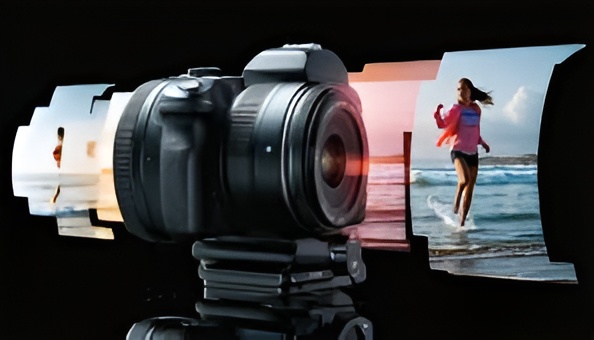
🎥 Smart Autofocus in Video
Videographers are experiencing a revolution too.
AI enables:
🎬 Smooth face tracking in vlogs
🦁 Animal subject tracking in wildlife films
🚁 Drone shooting with target lock
🎭 Cinematic autofocus transitions driven by scene recognition
Filmmaking is now more automated—yet more professional.
📷 More Creative Freedom
When autofocus and tracking are handled by AI:
✨ The photographer is free to focus on composition
✨ Creative timing becomes easier
✨ Beginners get professional outcomes
Instead of worrying about technical settings, photographers can concentrate on the story.
AI becomes your second shooter—catching moments you might have missed.
🔍 Ideal Use Cases
| Photography Style | AI Benefit |
|---|---|
| Sports | Higher accuracy for fast athletes |
| Wildlife | Eye-lock on unpredictable animals |
| Street photography | Quick reaction to sudden candid moments |
| Kids & pets | Perfect shots of restless subjects |
| Travel | Clear focus in dynamic environments |
Everyday photography becomes sharper, faster, and more emotionally rich.
🛡️ Tackling Common Problems
Before AI, photographers struggled with:
❌ Missed focus
❌ Motion blur
❌ Sluggish AF performance
❌ Difficulty tracking small + fast subjects
❌ Manual focus adjustments in stressful moments
AI technology has largely eliminated these frustrations — raising the standard for even casual snapshots.
🚀 Where Is This Trend Going?
Smart Autofocus and Subject Tracking are just beginning.
Future cameras will:
🔹 Recognize emotions → focus on most expressive subjects
🔹 Track gaze direction → keep eyes sharp even when moving fast
🔹 Use 3D spatial mapping → predict motion in depth, not just sideways
🔹 Adjust autofocus based on storytelling — the scene’s meaning
Cameras will evolve from mechanical tools into intelligent visual assistants.
✅ Final Thoughts
AI Smart Autofocus and Subject Tracking represent one of the biggest breakthroughs in camera technology. They eliminate the hardest barrier in photography—speed and unpredictability. Now:
📌 Action is captured flawlessly
📌 Every shot becomes reliably sharp
📌 Creativity becomes the primary focus
Whether you’re photographing wildlife in the jungle or your dog in your backyard, AI ensures the moment is never lost.
4️⃣ AI-Generated Photography (Text-to-Image)
Platforms like Midjourney and DALL·E show how generative AI can create realistic or artistic images without a camera, changing how we define photography itself.
5️⃣ Noise Reduction With Deep Learning
Low-light photos will look clearer with less grain, making night photography more accessible.
6️⃣ AI-Driven HDR and Color Correction
Cameras will analyze dynamic range and enhance shadows and highlights intelligently, improving the overall tone and vibrancy.
7️⃣ Personalized Camera AI Profiles
AI will learn your photography style—whether cinematic, bright, or moody—and apply customized settings automatically.
8️⃣ AI-Powered Background Editing
Remove or replace backgrounds in one tap—perfect for product photos, portraits, or commercial shoots.
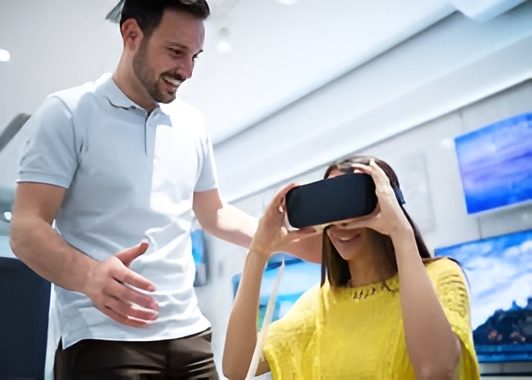
9️⃣ Virtual Try-On and AR Photography
Retail brands will rely on AI + AR to show customers how clothes, makeup, or furniture would look in real environments—boosting e-commerce sales.
🔟 Advanced Face Recognition & Beauty Filters
Portrait photography will become smarter with:
- Skin tone correction
- Facial feature enhancements
- Blemish removal
All while maintaining a natural look.
1️⃣1️⃣ Automated Photo Curation
AI will select the best shots from a photoshoot, eliminating duplicates and blurry images—saving hours of sorting time.
1️⃣2️⃣ Drone Photography Intelligence
Drones will avoid obstacles, recognize landscapes, and plan flight paths automatically for perfect aerial shots.
1️⃣3️⃣ AI in Professional Editing Workflows
Tools like Photoshop AI, Luminar Neo, and Topaz Labs will speed up post-production using:
- Sky replacement
- Object removal
- Smart masks
What once took hours will take seconds.
1️⃣4️⃣ Ethical Deepfake Prevention
As AI grows, so does manipulation. AI systems will also detect fake images and protect copyright in digital photography.
1️⃣5️⃣ Voice-Controlled Smart Cameras
Photographers can command the camera hands-free:
“Focus on the eyes”
“Increase brightness”
“Capture burst shot”
Perfect for remote and action photography.
✅ Why AI Photography Matters for the Future
| Benefit | Impact |
|---|---|
| Faster Editing | Saves time for creators & businesses |
| Higher Photo Quality | Professional results for everyone |
| Creative Freedom | New styles, effects & possibilities |
| Smart Automation | Focus more on creativity, less on settings |
| Accessibility | Beginners and hobbyists can achieve pro-level results |
AI is not replacing photographers — it’s empowering them with smarter tools that unlock creativity like never before.
📌 Final Thoughts
The rise of AI camera technology and AI photography is transforming the entire photo industry. From capturing images to editing and distribution, Artificial Intelligence is making photography simpler, smarter, and more impactful.
Whether you’re a professional photographer, content creator, or just love taking pictures—this AI revolution will shape how we capture the world from now on more know click herehttp://decodeai.blog
The future of photography isn’t just digital…
🔹 It’s intelligent.
🔹 It’s automated.
🔹 It’s AI-powered.
Wonderful
Literally this content is so helpful 👍