
Conversational AI has rapidly evolved from simple command-based bots into intelligent digital companions capable of understanding human language, behavior, emotions, and intent. Today, voice assistants like Google Assistant, Amazon Alexa, and Apple Siri—along with AI-powered virtual assistants used in customer service—are reshaping how we interact with technology. These tools not only respond to queries but also learn from user interactions to deliver personalized experiences Conversational AI.
Below are 10 powerful ways Conversational AI is transforming voice assistants and virtual assistants across industries and everyday life Conversational AI.
1️⃣ Natural Language Understanding (NLU) for Better Conversations
Natural Language Understanding (NLU) is one of the core pillars of Conversational AI. It helps machines interpret not just the words we speak but the actual meaning behind those words. Earlier voice assistants were limited and could only understand fixed commands such as “Play music” or “Call Mom”. They struggled with the real way humans communicate — using slang, different accents, incomplete sentences, sarcasm, or context-based instructions Conversational AI.
NLU solves this challenge by enabling AI systems to understand language like humans do. It focuses on the intent behind every sentence and the context in which it is spoken Conversational AI more to know click here…https://www.ibm.com/think/topics/natural-language-understanding

🔍 What Exactly Does NLU Do?
When you say something like:
“I’m cold, can you turn it up?”
A traditional assistant might not understand what “it” refers to. But with NLU, a conversational AI can infer that:
- Intent: Changing room temperature
- Entity: Increasing heat
- Context: Smart home environment
So the response becomes accurate and helpful Conversational AI.
NLU breaks sentences into meaningful elements using techniques like:
✅ Intent Recognition — What does the user want?
✅ Entity Extraction — What specific data is included? (names, dates, places, products)
✅ Context Tracking — What was discussed earlier?
✅ Sentiment Detection — Is the user angry, happy, or confused?
All these factors contribute to a smarter and more human-like conversation.
🌍 Understanding Different Languages & Speech Patterns
People speak differently depending on:
- Location and culture
- Age and gender
- Education level
- Emotional state
Humans may say:
- “Turn on the AC”
- “It’s too hot in here”
- “Can you cool this room?”
- “Increase the fan speed, please”
All these mean the same thing — adjust the temperature.
NLU helps conversational systems adapt to user diversity by recognizing:
🗣️ Accents
💬 Slang and casual phrases
🔀 Short or incomplete commands
😅 Humor and sarcasm
Thanks to NLU, we no longer need to speak like robots to communicate with robots Conversational AI.

🧠 How NLU Enhances Conversational AI
NLU is what makes digital assistants:
- More natural
- More intuitive
- More accurate
- Less frustrating
It allows voice assistants to handle complex interactions such as:
📌 Booking movie tickets
📌 Setting conditional reminders (“remind me if it rains tomorrow”)
📌 Understanding multiple instructions (“Turn off the lights and lock the door”)
📌 Carrying long conversations without losing context
This builds trust between users and AI — making it feel more like talking to a helpful companion than a machine.
🤖 AI Systems Learn Over Time
NLU models rely heavily on machine learning and deep learning. Every interaction teaches them something new. For example:
If many users say:
👉 “Order me a pizza”
The system starts associating “pizza” with food delivery apps.
So over time:
✅ Responses get faster
✅ Results become more accurate
✅ Recommendations become more relevant
This continuous learning is what drives the massive improvement in assistants like Alexa and Siri today Conversational AI.
🛠️ Where is NLU Used in Real Life?
NLU powers a wide range of advanced technologies:
| Application | How NLU Helps |
|---|---|
| Customer Support Chatbots | Understand complaints, recommend solutions |
| Smart Home Control | Recognize natural commands for appliances |
| Cars with Voice Assistants | Enhance safety by reducing manual input |
| Healthcare Chatbots | Understand symptoms described in patient language |
| Business Automation | Extract useful information from emails or documents |
| Banking & E-commerce | Secure transactions using voice + detect intent |
NLU has become a global driver of digital transformation, improving convenience, customer experience, and accessibility.
🎯 Real-World Example: Voice Assistants
Let’s say a user asks:
“Can you remind me to call mom after my meeting ends?”
A simple system might ask:
🚫 “What time is your meeting?”
🚫 “Who is mom?”
🚫 “After which meeting?”
But NLU enables AI to detect:
- Event dependency
- Relationship with contact
- The right timing context
So the assistant sets the reminder without confusion or repetitive questions Conversational AI.
That level of intelligence is exactly what is reshaping how we interact with technology.
🔐 Security and Voice Authentication
NLU combined with voice recognition allows assistants to:
✅ Identify who is speaking
✅ Verify identity before accessing personal data
✅ Provide different responses for different users
This makes smart assistants more secure and personalized.
✅ Final Thoughts
Natural Language Understanding is redefining human-machine communication. It turns spoken or written inputs into meaningful actions by:
✔ Capturing intent
✔ Recognizing patterns
✔ Learning over time
✔ Adapting to human language styles
As NLU continues to advance, conversations with AI will feel:
- More natural
- More emotionally aware
- More context-driven
- More efficient
In the future, AI won’t just understand what we say — it will understand what we mean before we even finish our sentence.
2️⃣ Personalization Through Machine Learning
AI-powered assistants analyze user habits like:
- Frequently asked tasks
- Preferred entertainment
- Daily routines
- Smart home usage
This helps assistants proactively provide suggestions — whether it’s recommending music, setting reminders, or controlling smart devices automatically.
3️⃣ Real-Time Voice Recognition and Speech Processing
Modern assistants can:
✅ Understand spoken commands instantly
✅ Interpret background noise
✅ Identify specific voices for security and personalization
Voice biometrics even allows features like voice authentication for secure transactions (banking, smart devices access, etc.).
4️⃣ Emotional Intelligence for Empathetic Responses
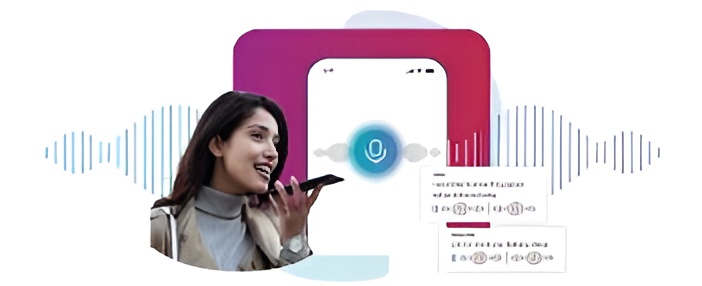
Emotional Intelligence (EI) in Conversational AI is transforming how voice assistants and virtual assistants connect with users. Traditionally, machines could only process literal words. They lacked the ability to understand the feeling behind a message. Today, thanks to sentiment analysis and affective computing, AI can detect emotions such as anger, sadness, irritation, joy, or confusion — allowing responses that feel more empathetic, supportive, and human-like Conversational AI.
This shift is crucial because communication isn’t just about words — 70% of meaning comes from tone, emotion, and intent. When AI recognizes emotional cues, conversations become more natural, helpful, and satisfying.
❤️ How Emotional Intelligence Works in AI
To understand emotions, AI analyzes:
✔ Tone of voice
✔ Speed of speech
✔ Choice of words
✔ Punctuation and typing patterns (in chat)
✔ Sentiment polarity (positive, neutral, negative)
For example:
- “I love this” = positive emotion
- “This is annoying” = negative emotion
- “I need help…” = urgency and stress
Advanced algorithms can also detect sarcasm, frustration, or excitement, leading to more accurate responses Conversational AI.
💡 Key Components of Emotionally Intelligent AI
| Component | What It Does | Impact |
|---|---|---|
| Sentiment Analysis | Detects positive/negative feelings | Helps personalize communication |
| Emotion Recognition | Identifies mood changes | Supports mental health or stress relief |
| Empathy Modeling | Generates caring and supportive responses | Improves trust and user comfort |
| Context Awareness | Understands situation or history | Avoids repeating mistakes and improves flow |
These technologies together make digital assistants feel like real conversational partners.
🤝 Why Emotional Intelligence Matters
Without EI, conversations with AI can feel:
- Robotic
- Impersonal
- Frustrating
- Unhelpful
But with emotional awareness:
✨ Users feel heard
✨ Confidence in technology increases
✨ Customer loyalty improves
✨ AI becomes a reliable companion
People want technology that understands them, not just responds to them.
📌 Real-World Impact: Customer Service
Customer service is one of the biggest beneficiaries of emotionally intelligent AI.
AI-powered chatbots can:
✅ Detect frustration from messages like “I already tried this, it’s not working!”
✅ Apologize appropriately
✅ Offer instant escalation to a human agent
✅ Provide reassurance during long wait times
This leads to:
- Faster issue resolution
- Better customer satisfaction
- Reduced support costs for businesses
Instead of responding with generic lines, the chatbot adapts to emotional intensity in real time Conversational AI.
🧑⚕️ Support for Mental Health and Wellness
Emotionally intelligent AI is becoming an essential tool in mental health apps and therapy bots. These systems can:
- Recognize signs of sadness, stress, or anxiety
- Provide instant emotional support
- Encourage healthy coping strategies
- Suggest professional help when needed
Apps like Wysa and Woebot show how AI can provide comfort during moments when a real therapist is unavailable.
When someone types “I don’t feel good anymore,”
sentiment analysis signals high emotional risk, prompting a caring and urgent response.
This technology may not replace human mental health care — but it is a powerful complement.
🚘 Safer Driving With Emotion-Aware Cars
Automotive companies are integrating emotional intelligence into voice assistants inside cars.
They can:
- Detect stress or anger based on voice speed
- Calm drivers with soothing responses
- Reduce distractions and risks
- Suggest breaks during long trips
This combination of automation and emotional monitoring improves road safety Conversational AI.
🧠 Adaptive Learning in Education
Emotion-aware virtual tutors help students by:
✔ Understanding confusion or frustration
✔ Adjusting teaching methods
✔ Encouraging motivation with positive reinforcement
If a student repeatedly asks the same question, the assistant recognizes struggle and slows down the lesson instead of repeating the same difficult explanation Conversational AI.
This makes digital learning more personal and effective.
🔐 Building Trust Through Emotional Bonding
Humans connect emotionally — even with machines.
When AI responds empathetically:
💬 Conversations feel safe
🔒 Privacy concerns reduce
🤝 Trust increases
🌱 Users return more often
Businesses benefit because users prefer brands that make them feel valued.
🧩 Challenges of Emotionally Intelligent AI
While the technology is powerful, there are still challenges:
| Challenge | Description |
|---|---|
| Misinterpretation | AI may misunderstand complex emotions |
| Privacy Risks | Emotional data must be protected |
| Cultural Differences | One expression may mean different things globally |
| Over-Dependence | Users may rely too much on AI for emotional support |
Developers must design emotional AI responsibly to avoid ethical issues.
🚀 Future of Emotional Intelligence in AI
In the near future, conversational AI may:
🌟 Detect deeper emotions with facial expressions + body language
🌟 Provide mental health predictions based on long-term patterns
🌟 Engage in personalized motivational coaching
🌟 Become companions to elderly or disabled individuals
The goal isn’t to replace human relationships but to enhance well-being and accessibility.
✅ Final Summary
Emotional Intelligence makes Conversational AI:
✔ More human-like
✔ More supportive
✔ More accurate and meaningful
✔ More valuable in business and personal life
With empathy-driven technology, voice assistants and chatbots are evolving from simple tools into emotional companions that understand how users feel — not just what they say.
5️⃣ Automation of Daily Tasks
Conversational AI allows users to perform tasks faster through voice rather than manual effort, such as:
- Booking appointments
- Managing calendars
- Sending messages
- Setting alarms or navigation routes
Virtual assistants boost productivity and convenience throughout the day.
6️⃣ Powerful Customer Service Support
Businesses increasingly rely on conversational AI assistants for:
- Answering FAQs instantly
- Handling support tickets
- Routing calls to human agents when required
- Providing 24/7 service without waiting queues
This reduces operational costs while improving customer experience.
7️⃣ Smart Home Integration
Voice assistants now act as central controllers for smart homes:
- Lights
- Thermostats
- Security systems
- Smart appliances
Users can manage their entire home with simple voice commands — making life easier and more accessible for everyone.
8️⃣ Multilingual and Cross-Cultural Interaction
Conversational AI supports multiple languages and dialects, breaking communication barriers.
It also adapts tone and style for different cultures, making it useful for:
🌍 International businesses
📚 Global learning experiences
🎧 Multilingual entertainment
This ensures inclusivity and global accessibility.
9️⃣ Contextual Memory for Continuous Conversations
One of the most powerful advancements in Conversational AI is the ability to remember prior interactions — known as contextual memory. Early chatbots worked like basic command-response machines. If you asked a follow-up question, they couldn’t understand what you were referring to. Every message was treated like a completely new conversation.
Today, breakthroughs in artificial intelligence — especially transformer-based models like GPT — have changed that dramatically. Modern voice assistants and virtual assistants can retain context to provide smoother, smarter, and more human-like conversational experiences.
⭐ What Is Contextual Memory in AI?
Contextual memory allows AI systems to:
- Recall earlier parts of a conversation
- Understand pronouns like “he,” “she,” “it,” or “they”
- Track conversation goals and intent
- Deliver suggestions based on previous interactions
- Personalize responses using learned preferences
It mimics how humans talk. For example:
User: “Book a movie ticket.”
AI: “Sure! Which movie would you like?”
User: “The one I mentioned earlier.”
AI: remembers → “Avatar 3 at 7 PM, right?”
Without contextual memory, the AI would ask users to repeat everything — creating frustration and breaking the flow.
🧩 How Transformers Like GPT Enable Memory
The transformer architecture allows AI to process entire sequences of text at once, not just one sentence at a time. This enables:
✅ Awareness of earlier messages
✅ Understanding long-term conversation structure
✅ Better prediction of user needs
✅ Smooth back-and-forth communication
Instead of forgetting the past after each interaction, the system can carry information forward — just like humans do.
✅ Why Context Matters in Conversations
Communication is not linear — it’s interconnected. Humans rely on:
- Shared history
- Implied meaning
- Conversation patterns
- Emotional continuity
For example:
“Turn it off.”
What is “it”?
The TV? The fan? The lights?
Contextual memory allows AI to infer meaning from previous actions or ongoing tasks.
🚀 Real-World Benefits of Contextual Memory
Here’s how contextual memory upgrades user experience:
| Benefit | What It Means to Users |
|---|---|
| Natural dialogue | Conversations flow like talking to a real person |
| Less repetition | No need to restate earlier information |
| Personalized support | AI remembers preferences and habits |
| Proactive help | AI suggests what you need before you ask |
| Higher satisfaction | Feels more reliable and intelligent |
Context = confidence that the assistant understands you.
🏠 Smart Home Automation
Context-aware AI makes smart homes smarter:
User: “Turn on the living room lights.”
Later: “Dim them to 50.”
The assistant remembers which lights “them” refers to.
It can also learn patterns:
- “Every night at 10 PM, set bedroom lights low”
- “Remind me to close windows if it rains”
The home responds to lifestyle, not just commands.
🛍️ E-commerce and Personal Shopping Assistants
Virtual shopping assistants use conversation history to:
- Recommend products based on preferences
- Track orders without asking for details repeatedly
- Suggest reorders when supplies may be running low
Example:
“You bought protein powder last month. Would you like to reorder?”
The AI acts like a smart personal shopper who knows your tastes.
☎️ Customer Service Automation
Contextual memory reduces support frustration:
- No repeating issue details
- Switching between agents is smoother
- AI follows the conversation journey from problem → solution
Customers feel heard, which builds trust and loyalty.
🧑🎓 Education and Learning Assistants
AI tutors adapt to student progress:
- Remember mistakes and strengths
- Offer personalized examples
- Track goals and learning style
If a student struggles with a math concept, the assistant won’t move on — it will simplify explanations or offer extra practice.
This turns AI into a continuous learning partner.
👩⚕️ Healthcare and Wellness Assistants
Health-focused AI can:
- Monitor mood and daily logging patterns
- Detect behavioral changes
- Provide customized health reminders
- Maintain continuity for mental well-being support
Example:
“You mentioned feeling stressed yesterday. Would you like a breathing exercise today?”
This shows compassion and proactive care.
🔐 Security + Privacy Considerations
With memory comes responsibility. Developers must ensure:
🔒 User permission for stored data
🔒 Ability to erase history anytime
🔒 Data encryption for safety
🔒 Transparent usage policies
Contextual memory must protect users while helping them.
⏭️ The Future of Context-Aware AI
Soon, conversations with AI will feel genuinely human:
✨ AI that remembers personal milestones
✨ Emotional memory — understanding how you usually feel
✨ AI that adapts to long-term growth and goals
✨ Multi-device continuity — phone to smart home to car
We may eventually feel like AI truly knows us — improving daily life in subtle but powerful ways.
✅ Final Summary
Contextual memory is what transforms Conversational AI from robotic to relational. It enables:
✔ Better recall
✔ Personalization
✔ Smooth and adaptive conversation
✔ Understanding beyond literal words
✔ Trust and emotional comfort
With transformer models like GPT, AI assistants can maintain meaningful conversations — leading to richer, smarter, and more enjoyable human-AI interaction..
🔟 Advanced Problem Solving and Knowledge Access
Conversational AI enables assistants to:
- Search the internet in real time
- Provide answers backed by external knowledge sources
- Solve complex queries through reasoning and data understanding
Whether it’s health tips, tech support, or cooking guidance — users get quick and reliable help.
✅ Final Thoughts
Conversational AI is pushing voice assistants and virtual assistants into the next generation of digital communication. From enhancing convenience in daily tasks to powering customer service in industries, AI is making technology more intelligent, responsive, and personalized.
As these systems continue to evolve, we can expect even deeper integration into healthcare, education, e-commerce, and smart workplaces — transforming how humans and machines collaborate more information go to my websites…..http://decodeai.blog.
It is so helpful for me