
Natural Language Processing (NLP) is no longer a futuristic concept—it’s reshaping the way humans interact with machines today. At the heart of this revolution are NLP models, powered by AI language models and sentiment analysis models, enabling computers to understand, interpret, and generate human language with remarkable accuracy. From automating customer service to analyzing public sentiment, these technologies are transforming industries across the globe.
Let’s explore 7 powerful applications of NLP models that showcase how AI is changing the future of technology.
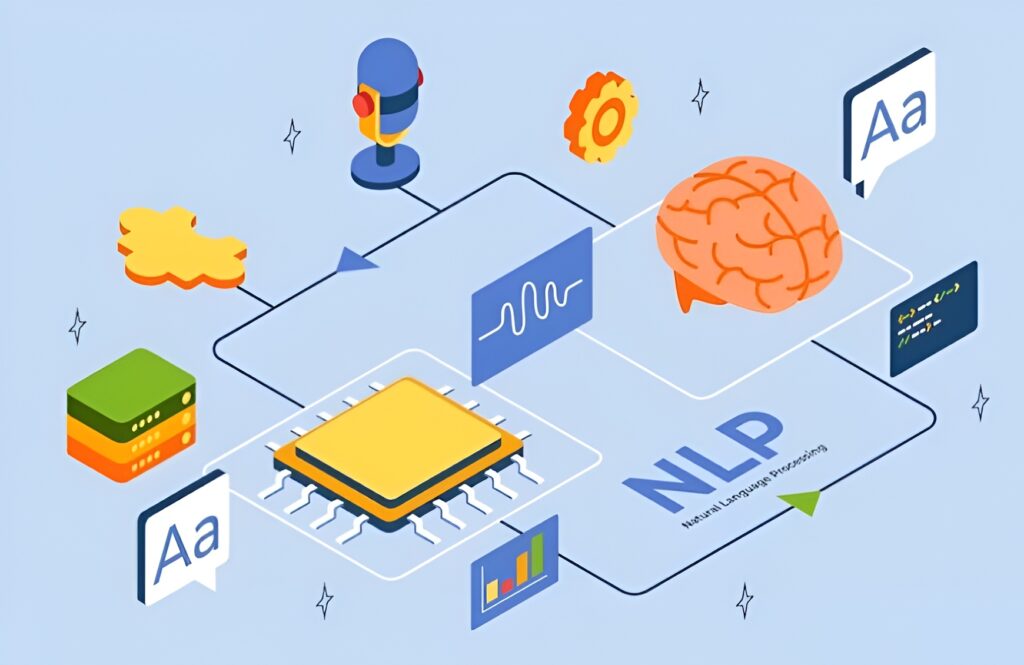
1. Chatbots and Virtual Assistants
One of the most visible applications of NLP models is in chatbots and virtual assistants like Siri, Alexa, and customer support bots. AI language models allow these systems to:
- Understand user intent in natural language
- Respond appropriately to queries
- Maintain context across conversations
Meanwhile, sentiment analysis models add an extra layer of intelligence by detecting a user’s emotional tone—whether they’re frustrated, happy, or confused. This enables chatbots to respond empathetically, improving customer satisfaction and engagement.
2. Sentiment Analysis for Market Insights
Businesses today rely heavily on understanding customer feedback. Sentiment analysis models powered by NLP can process massive amounts of text from social media, reviews, and surveys to:
- Identify customer opinions and emotions
- Spot trends and potential product issues
- Gauge brand reputation in real-time
For example, a company can quickly detect if a new product launch is generating positive excitement or negative backlash, allowing them to make timely adjustments.
3. Automated Content Generation
NLP models have made content creation faster and more efficient than ever. AI language models can:
- Draft blogs, articles, and emails
- Rewrite text in different tones and styles
- Generate marketing copy and product descriptions
This reduces the workload for writers and marketers, ensuring consistent, high-quality content while saving significant time. Combined with sentiment analysis, AI can also tailor content to resonate with specific audiences emotionally.
4. Language Translation
In an increasingly globalized world, language barriers can pose significant challenges for businesses, educators, travelers, and digital platforms. Accurate and context-aware translation is no longer a luxury—it’s a necessity. Traditional translation tools, however, often fall short. They may translate words literally but fail to preserve the tone, intent, or cultural nuances of the original message. This is where NLP models and AI language models truly shine, offering powerful solutions that go far beyond word-for-word translation.
Real-Time Translation Made Possible
Modern NLP models can translate text almost instantaneously, allowing for seamless communication across languages. Whether it’s a business conducting international meetings, a customer interacting with a global support team, or a user browsing multilingual content online, AI-powered translation ensures that communication happens in real-time.
Imagine a multinational company launching a marketing campaign in multiple countries. A traditional translation approach might take days to ensure accuracy, review, and localization. NLP models, however, can deliver translations in seconds while preserving meaning, allowing teams to act faster and reach a wider audience efficiently.
Preserving Context and Meaning
One of the biggest challenges in translation is maintaining context. Words often carry multiple meanings depending on the sentence, culture, or even the audience. For instance, idioms like “break the ice” or “hit the books” lose meaning if translated literally. AI language models understand context and interpret phrases in a way that keeps the original intent intact.
By processing surrounding sentences and the broader conversation, NLP models can differentiate subtle meanings and choose the most appropriate translation. This reduces misunderstandings and ensures that the message feels natural to the target audience, not awkward or robotic.
Cultural Nuances and Tone
Beyond meaning, successful communication also depends on tone and cultural sensitivity. Marketing slogans, product descriptions, and customer support messages often require nuanced translation to resonate emotionally with the target audience.
Sentiment analysis integrated with NLP models can detect the emotional tone of the original text—whether it’s humorous, empathetic, formal, or persuasive. The system then ensures that this tone carries over in the translated version. For example, a playful tagline in English can be adapted into a culturally relevant and equally engaging message in Spanish or Japanese, rather than being translated word-for-word.
Enabling Global Business Communication
Businesses today operate in multiple regions with diverse customer bases. Clear communication across languages is critical for customer service, sales, marketing, and internal collaboration. NLP-powered translation allows companies to:
- Respond to customer queries in their preferred language
- Translate product manuals and documentation quickly
- Localize websites, apps, and social media posts efficiently
- Facilitate cross-border team collaboration
This capability not only improves operational efficiency but also strengthens brand loyalty by showing respect for local languages and cultures.
Supporting Multilingual AI Systems
Many AI applications, such as chatbots, virtual assistants, and learning platforms, serve global audiences. NLP models ensure that these systems can communicate effectively in multiple languages, maintaining natural conversations regardless of the user’s language. For instance, a chatbot powered by an AI language model can understand a query in Mandarin, provide a response in the same language, and even detect if the user is expressing frustration, excitement, or confusion through sentiment analysis.
This level of sophistication ensures that AI systems feel human and approachable across cultures.
Reducing Errors and Misinterpretation
Manual translations, especially when scaled across multiple languages, are prone to errors. A small mistake in legal documents, contracts, or financial reports can have serious consequences. NLP models reduce these risks by providing highly accurate translations that consider context, grammar, syntax, and tone.
Additionally, AI-powered translation tools learn from feedback and improve over time. This continuous improvement ensures higher accuracy for future translations and increases trust in AI systems for critical business operations.
Applications Across Industries
Language translation powered by NLP models is being leveraged in various sectors, including:
- E-commerce: Localizing product descriptions and reviews for international customers
- Education: Translating learning materials for students worldwide
- Healthcare: Assisting with multilingual patient communication and documentation
- Tourism & Travel: Offering real-time translation for guides, apps, and customer support
- Media & Entertainment: Subtitling movies, TV shows, and videos while retaining emotional nuance
In each case, sentiment analysis ensures that the translation carries the intended emotional impact, improving engagement and understanding.
Future of AI-Powered Translation
The future of NLP-powered translation is bright. Advances in deep learning and AI language models are enabling:
- Real-time spoken translation, making live conversations across languages effortless
- Contextual understanding that adapts to regional dialects and slang
- Emotionally aware translation, preserving humor, sarcasm, and empathy
- Integration with augmented reality, allowing travelers and professionals to interact with signs, menus, or documents in real-time
These advancements promise a world where language barriers no longer limit communication, collaboration, or creativity.
Final Thought
Language is more than words; it carries culture, emotion, and intent. NLP models and AI language models, combined with sentiment analysis, ensure that translated text preserves the meaning, tone, and context of the original message. From real-time communication to global business operations, education, healthcare, and beyond, these technologies are transforming how we connect across languages.
By breaking down linguistic barriers, AI-powered translation makes the world more accessible, inclusive, and efficient. As technology continues to evolve, multilingual communication will become seamless, intuitive, and emotionally aware—bridging the gap between cultures and bringing people closer together.
5. Healthcare and Clinical Documentation
Healthcare professionals are increasingly using NLP models to manage large volumes of text-based data, including patient records, medical reports, and research papers. Applications include:
- Extracting key information from clinical notes
- Summarizing patient histories
- Detecting critical patterns in medical documentation
AI language models ensure accurate understanding of medical terminology, while sentiment analysis can help detect patient emotions from survey responses or telemedicine interactions, contributing to better care.

6. Enhanced Search Engines and Information Retrieval
The way we search for information online has evolved far beyond typing a few keywords into a search box. Today’s users expect accurate, context-aware results instantly. Traditional search engines relied mainly on keyword matching, which often produced results that were either irrelevant or overly broad. NLP models and sentiment analysis models have revolutionized the field, making information retrieval smarter, faster, and more personalized. These technologies allow search engines to understand intent, evaluate context, and deliver results that genuinely meet the user’s needs.
Understanding User Intent
The foundation of modern search optimization lies in understanding what the user actually wants. When someone types a query like “best Italian restaurants near me open after 10 PM,” traditional keyword-based search engines might just look for pages containing “Italian,” “restaurants,” or “10 PM.” The results could be scattered, irrelevant, or incomplete.
NLP models analyze the full query and the context behind it. They can recognize that the user wants:
- Restaurants in a specific cuisine
- Open late at night
- Located nearby
By understanding the intent rather than just the words, AI-powered search engines return highly relevant results, saving users time and effort. This understanding also extends to conversational searches through voice assistants, where queries are often longer and more nuanced.
Ranking Results Based on Relevance
Search results are only as good as their ranking. Users rarely scroll past the first page, so presenting the most relevant content is critical. NLP models help by analyzing web pages and documents to determine:
- Topic relevance
- Quality of information
- User engagement indicators
- Semantic similarity to the query
This allows search engines to rank results intelligently, ensuring the top links provide real value. For example, if a user searches for “tips for reducing anxiety naturally,” the AI can distinguish between scholarly articles, personal blogs, and product promotions, and rank results according to credibility, usefulness, and user intent.
Sentiment analysis can further refine rankings. For instance, a query like “best online courses for beginners” can surface courses with positive reviews and feedback, highlighting options that users are more likely to trust and engage with.
Summarizing Large Datasets
Today, users are not just looking for links—they want insights. NLP models excel at processing massive datasets and summarizing information concisely. For example:
- Summarizing research papers for students or professionals
- Extracting key points from long-form articles
- Generating summaries of news stories or reports
This capability allows search engines to provide users with immediate, actionable information without requiring them to wade through dozens of pages. For businesses, this means faster decision-making and better access to trends, data, and competitive insights.
Personalized and Emotionally Intelligent Results
Sentiment analysis takes search personalization to the next level. By analyzing user preferences and the emotional tone of content, AI can surface:
- Positive reviews for a product or service
- Critical feedback highlighting potential issues
- Neutral or objective information for balanced understanding
For example, a user researching a new smartphone may want to see highly rated reviews first or avoid overly negative opinions. NLP-powered search engines can automatically adjust results based on inferred sentiment, making information retrieval more tailored and meaningful.
Applications in Various Industries
The impact of NLP and sentiment analysis in search and information retrieval extends across industries:
- E-commerce: Helping shoppers find the most relevant products with personalized recommendations and reviews
- Healthcare: Assisting professionals and patients in locating medical information quickly and reliably
- Education: Enabling students and educators to access summarized research and learning materials
- Finance: Analyzing market trends, news sentiment, and financial reports for informed decision-making
- Media & News: Summarizing articles and highlighting trending topics based on user interests
In each case, NLP improves the quality, accuracy, and usability of search results, reducing frustration and enhancing user experience.
Supporting Voice and Conversational Search
With the rise of smart assistants like Alexa, Google Assistant, and Siri, conversational search has become a major part of information retrieval. Queries are now more natural and often phrased as questions, such as:
- “What’s the fastest route to downtown traffic-free?”
- “Which movies are trending this weekend?”
- “How do I reduce screen time effectively?”
NLP models interpret these queries beyond keywords, considering grammar, sentence structure, and context. Sentiment analysis can also detect urgency or emotion, helping the system prioritize critical information. This makes AI-powered search assistants feel more intuitive and human-like.
Reducing Information Overload
The sheer amount of content online can overwhelm users. NLP models help filter and organize information efficiently. They can:
- Detect and remove duplicate or low-quality content
- Highlight key insights or summaries
- Categorize results by relevance, theme, or sentiment
This ensures that users receive concise, high-quality, and trustworthy information, cutting down time spent sifting through irrelevant content.
The Future of Search Engines
As AI evolves, NLP-powered search engines will continue to improve in areas like:
- Predictive search that anticipates queries before they are typed
- Cross-platform search integrating web, social media, and enterprise data
- Emotionally intelligent search that adapts results based on mood or user intent
- Real-time summarization and interactive insights for faster decision-making
These innovations will make information retrieval smarter, faster, and more personalized than ever before.
Final Thought
NLP models and sentiment analysis are transforming search engines from simple keyword matchers into intelligent systems that understand context, detect intent, and provide personalized, meaningful results. Users no longer need to sift through pages of irrelevant content—the AI brings the most relevant information to the forefront, tailored to preferences and emotional context.
By combining natural language understanding with advanced sentiment analysis, modern search engines are not just finding information—they’re interpreting it, summarizing it, and making it actionable. In a world overflowing with data, this capability is essential, empowering users to make smarter decisions and access knowledge efficiently.
7. Fraud Detection and Compliance Monitoring
In today’s fast-paced digital world, fraud and regulatory non-compliance are among the biggest challenges for industries like banking, finance, insurance, and e-commerce. Traditional systems often rely on manual reviews or rule-based software that can miss subtle patterns. NLP models and sentiment analysis models are changing the game by enabling businesses to detect fraud and ensure compliance at an unprecedented scale and speed. These AI-driven systems analyze vast volumes of text and communication in real-time, turning raw data into actionable intelligence more to know click here…https://www.epayskylight.com/fraud-detection/?utm_term=payment%20fraud%20solutions&utm_campaign=max+conversions&utm_source=adwords&utm_medium=ppc&hsa_acc=2807466331&hsa_cam=22500424039&hsa_grp=182663465270&hsa_ad=749568708134&hsa_src=g&hsa_tgt=kwd-1422136587564&hsa_kw=payment%20fraud%20solutions&hsa_mt=p&hsa_net=adwords&hsa_ver=3&gad_source=1&gad_campaignid=22500424039&gbraid=0AAAAAqIWxPbQef7_pH7FglXAj5bDLD9gD&gclid=CjwKCAjwjffHBhBuEiwAKMb8pO7Oumjsf6X5rzxx-dxd72XShWKVMHlB1gu-K5AcuQL6hRwmGp6XSxoCWJAQAvD_BwE
Analyzing Text for Hidden Threats
Fraudsters are becoming increasingly sophisticated. They often use subtle manipulations in emails, chat messages, loan applications, or transaction notes that traditional systems fail to detect. NLP models can parse these documents, extract meaningful information, and detect anomalies that indicate potential fraud.
For example, consider a banking scenario where a customer service chat contains phrases like “urgent transfer” or “change account details immediately.” On their own, these words may seem normal, but when analyzed with NLP models combined with sentiment analysis, the system can flag unusual urgency, stress, or emotional cues that may indicate fraudulent behavior.
By processing language patterns, context, and tone, NLP models become capable of spotting:
- Unusual transaction instructions
- Repetitive or inconsistent customer queries
- Attempts to manipulate financial systems through text
This helps organizations prevent fraud before it escalates into serious losses.
Proactive Detection Through Pattern Recognition
One of the most powerful features of NLP models is their ability to recognize patterns across thousands of communications and transactions. Instead of relying solely on human review, AI can identify:
- Repeated suspicious behaviors across multiple accounts
- Abnormal patterns in customer interactions
- Potential collusion between individuals
For instance, an AI-powered system can compare email threads, chat logs, and transaction notes across multiple accounts to detect coordinated fraudulent schemes. Sentiment analysis adds another layer by detecting unusual emotional tones—stress, urgency, or evasiveness—that often accompany fraud attempts.
This proactive detection allows businesses to act early, saving time, money, and reputational damage.
Regulatory Compliance Monitoring
Beyond fraud, industries face complex regulatory environments. Financial institutions, for instance, must comply with anti-money laundering (AML) laws, Know Your Customer (KYC) requirements, and various data privacy regulations. Manual monitoring is slow and prone to human error. NLP models automate compliance monitoring by scanning communications and documentation for:
- Policy violations
- Sensitive data mishandling
- Non-compliant statements
Sentiment analysis ensures that communications convey appropriate intent and that customer interactions meet ethical and regulatory standards. This automation reduces the risk of penalties, fines, and reputational harm, while freeing compliance teams to focus on higher-level decision-making.
Enhancing Accuracy and Speed
Traditional fraud detection often relies on structured data, like transaction amounts or account histories. However, a significant portion of suspicious activity is hidden in unstructured data—emails, chat messages, or notes. NLP models excel at analyzing unstructured text, uncovering fraud signals that would otherwise go unnoticed.
By combining AI language understanding with sentiment analysis, companies can quickly:
- Identify abnormal language patterns
- Flag potentially risky behavior
- Prioritize cases for human investigation
The speed and accuracy of NLP-driven systems drastically reduce the time between fraud detection and mitigation, minimizing potential losses.
Reducing Human Workload and Error
Compliance teams and fraud investigators often work long hours reviewing massive volumes of data, leading to fatigue and errors. NLP models and sentiment analysis alleviate this burden by filtering out routine communications that are low risk and highlighting high-priority alerts.
This AI-human collaboration ensures that:
- Employees focus on cases that truly require attention
- Investigations are more precise and effective
- Decision-making is faster without sacrificing accuracy
The result is a safer, more efficient operational environment.
Applications Across Industries
While banking and finance are primary users, NLP models for fraud detection and compliance monitoring are valuable across various sectors:
- Insurance: Detecting fraudulent claims or exaggerated reports
- E-commerce: Monitoring seller communications for fraudulent listings or scams
- Healthcare: Ensuring compliance with patient data regulations and detecting insurance fraud
- Telecommunications: Detecting phishing attempts and account takeovers
Every industry dealing with sensitive data or large-scale transactions benefits from these AI-driven solutions.
Real-World Impact
Several financial institutions and fintech companies are already leveraging NLP and sentiment analysis for risk management. The benefits include:
- Faster response times: Fraud alerts are generated in real-time
- Higher detection rates: Subtle patterns are identified before they escalate
- Improved customer trust: Customers feel secure knowing their data is protected
- Cost reduction: Fewer resources are spent on manual review and remediation
By analyzing tone, context, and patterns in communications, AI not only prevents financial loss but also strengthens compliance culture and customer confidence.
The Future of Fraud Detection and Compliance
As NLP models evolve, the future promises even more sophisticated monitoring tools. Advanced AI will integrate:
- Multilingual analysis for global communications
- Cross-platform monitoring for email, chat, and social media
- Deep learning models that understand nuanced emotional cues
- Real-time predictive analytics to prevent fraud before it happens
This will transform how organizations approach security and compliance, making AI an indispensable partner in protecting businesses and customers alike.
Final Thought
Fraud and regulatory non-compliance are complex challenges, but NLP models and sentiment analysis provide a smart, scalable solution. By analyzing unstructured text, detecting abnormal patterns, and monitoring compliance across communications, these technologies give businesses the tools they need to act quickly and confidently.
In a world where speed, accuracy, and trust are critical, NLP-driven fraud detection and compliance monitoring isn’t just a competitive advantage—it’s becoming essential. With AI handling the heavy lifting, human teams can focus on strategic decisions, ensuring safer, more secure, and more compliant operations across industries.
Final Thoughts
The combination of NLP models, AI language models, and sentiment analysis models is powering a new era of technology. From creating human-like chatbots to monitoring brand sentiment, translating languages, generating content, and enhancing security, the applications are both diverse and transformative.
As AI continues to evolve, these models will become even more accurate, adaptive, and capable of understanding the nuances of human language. Businesses, educators, healthcare providers, and developers alike are already leveraging NLP to improve efficiency, engagement, and insight, proving that the future of technology is not just intelligent—it’s conversational, emotional, and human-centric.
By integrating NLP models into everyday workflows, companies can deliver smarter solutions, happier customers, and more innovative products. The era of AI-powered language understanding is here, and it’s only going to get more powerful ….Blogs
Helpful content