
Artificial Intelligence (AI) is rapidly transforming modern healthcare. Today, AI doctors and artificial intelligence doctors are helping medical professionals diagnose diseases faster, personalize treatments, and improve patient outcomes. As technology continues to advance, AI is expected to become an even more important part of medical treatment in the future.
Below are 10 powerful future trends showing how AI doctors will reshape global healthcare AI Doctors.
1️⃣ Real-Time Disease Detection
One of the most transformative contributions of AI doctors to modern medicine is real-time disease detection. Traditional diagnosis often requires days or even weeks to complete due to laboratory procedures, manual review of imaging results, and the limited availability of specialists. During this waiting period, many diseases — especially critical ones like heart attacks, cancer, and brain disorders — continue to worsen inside the body.
With the rise of AI medical diagnosis systems, this delay is drastically reduced. Artificial Intelligence can instantly scan a patient’s real-time body signals, interpret patterns in vital data, and alert healthcare professionals before the condition becomes severe. This leap in medical science has the potential to save millions of lives by enabling faster intervention and preventing complications more to know click here….https://www.sciencedirect.com/science/article/pii/S2772899424000417
🫀 How AI Detects Diseases in Real Time
AI doctors use a combination of technologies:
- Machine learning algorithms
- Advanced medical imaging analysis
- Wearable health sensors
- Predictive analytics
- Electronic Health Record (EHR) integration
Here’s how it works:
1️⃣ A patient’s real-time data — such as blood pressure, glucose levels, oxygen saturation, heart rate, and brain activity — is collected from medical devices or wearables.
2️⃣ AI systems analyze this data continuously and compare it with patterns from millions of previous medical cases.
3️⃣ If abnormalities are detected, AI instantly sends an alert to doctors, nurses, or emergency services for immediate attention.
This ensures that treatment can begin before serious symptoms appear, making healthcare more proactive than reactive.
🧠 Predicting Critical Health Events Before They Occur
AI doctors are particularly effective in predicting:
- Heart attacks
- Stroke risk
- Sudden cardiac arrest
- Severe asthma attacks
- Sepsis (a life-threatening infection)
- Organ failure
For example, AI algorithms in hospitals can analyze ICU patient data every second and detect the early signs of sepsis up to 6 hours before human doctors recognize symptoms. This gives medical teams more time to intervene, significantly improving survival rates.
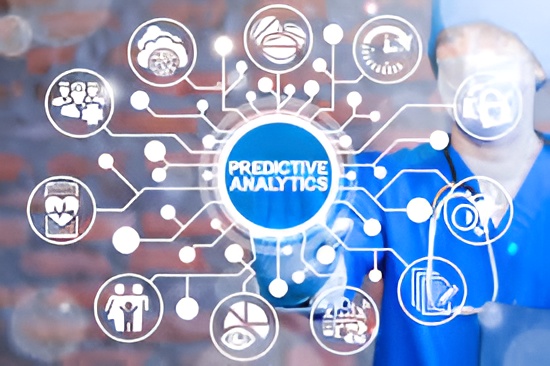
📱 Role of Wearable Devices in Early Diagnosis
Smart wearable devices like smartwatches and biosensors are now essential components of AI-powered healthcare. They can track daily health data and feed it into AI systems.
These devices help detect:
- Irregular heart rhythms (like atrial fibrillation)
- Sleep disorders
- High blood sugar fluctuations
- Stress levels and emotional health changes
This means that even at home, patients remain connected to healthcare networks. AI becomes their personal health guardian and can notify doctors instantly if something goes wrong — even while a person is sleeping or traveling.
🧬 AI Detecting Diseases at the Cellular Level
Beyond physical vitals, AI medical diagnosis systems are also capable of analyzing:
- Genetic data
- Microscopic blood cell patterns
- Tumor growth at its earliest stage
Deep learning models can identify cancer cells in imaging scans with accuracy similar to, or sometimes better than, experienced radiologists. By catching cancer early, AI doctors directly contribute to higher survival rates and more effective treatment options.
🏥 Reducing Burden on Doctors and Hospitals
Doctors handle enormous workloads every day. AI physicians help by:
- Filtering out false alarms
- Prioritizing urgent cases
- Reducing diagnostic errors
- Allowing specialists to focus on critical patients
This leads to:
✅ Shorter waiting times
✅ Better hospital efficiency
✅ Reduced stress on healthcare workers
Instead of replacing doctors, AI doctors become strong partners that improve decision-making and patient safety.
🌍 Benefits for Remote and Rural Communities
Many communities do not have access to trained doctors or advanced testing facilities. Real-time AI disease detection helps bridge this gap by enabling:
- Mobile diagnostic units
- Remote patient monitoring
- Telehealth consultations with AI support
Even in villages or underdeveloped regions, people will be able to receive faster diagnosis and life-saving alerts — without needing large hospital infrastructure.
🔐 Data Security and Patient Privacy
To ensure trust, AI systems rely on:
- Encrypted data transfers
- Secure medical cloud environments
- Strict patient consent protocols
These safety measures protect sensitive medical information while allowing AI to operate efficiently in real time.
🚀 Why Real-Time AI Detection Is the Future
| Feature | Traditional Diagnosis | AI Real-Time Detection |
|---|---|---|
| Speed | Slow | Instant |
| Accuracy | Good | Very High |
| Monitoring | Periodic checkups | Continuous 24/7 |
| Emergency Response | Delayed | Immediate Alerts |
| Accessibility | Hospital dependent | Works anywhere |
Real-time AI doctors enhance healthcare by:
✅ Preventing sudden medical emergencies
✅ Increasing chances of survival
✅ Supporting personalized patient care
✅ Making diagnosis faster and more accurate
✅ Final Summary
Real-time disease detection powered by AI doctors is a revolutionary advancement in medical science. It enables continuous monitoring, instant alerting, and predictive diagnosis — saving lives long before visible symptoms appear. As AI continues to evolve, every individual will have access to smart, always-available healthcare, making the world a healthier place.
2️⃣ Personalized Treatment Plans
Personalized medicine is one of the most significant advancements introduced by AI doctors and artificial intelligence doctors in modern healthcare. Earlier, doctors used a general approach to treat patients — similar treatments were given to people with the same disease, regardless of how their bodies reacted differently. But now, with the help of advanced AI medical diagnosis systems, treatment has evolved to become more specific, more accurate, and truly individual-focused.
AI has the power to analyze factors like genetics, lifestyle, medical history, and treatment response to create unique treatment plans for every patient. This revolutionary approach is helping patients recover faster, improve treatment success rates, and minimize harmful side effects.
🧬 How AI Builds Personalized Treatment Plans
AI doctors combine multiple data sources to understand a patient’s complete health profile:
✔ Genetic makeup (DNA analysis)
✔ Lifestyle patterns (diet, sleep, fitness)
✔ Environment and stress levels
✔ Previous medical treatments and responses
✔ Family medical history
✔ Real-time wearable health data
Advanced algorithms then compare this data with millions of medical case studies. Based on the results, the AI suggests the best treatment plan — uniquely designed for that patient.
This means no more guesswork. Healthcare becomes precisely tailored to the individual.
🔬 AI in Precision Medicine
One of the most powerful uses of AI in healthcare is precision medicine — where treatments are designed based on genetics and disease variations.
Example:
Two cancer patients may have tumors in the same organ, but the genetic structure of the tumors may be different. AI doctors can analyze those variations and recommend a treatment customized for each patient’s cancer type.
This leads to:
✅ Higher treatment success
✅ Fewer side effects
✅ Better long-term health
This is especially important in treating cancer, diabetes, cardiovascular disease, and rare genetic disorders.
🍽️ Lifestyle-Based Personal Healthcare
AI doesn’t treat just the disease — it helps improve the patient’s entire way of living. Wearable health devices and medical apps allow AI to gather lifestyle data continuously.
AI doctors can recommend:
- The ideal diet based on metabolism
- Personalized exercise routines
- Sleep improvement strategies
- Stress-management plans
This holistic approach helps prevent diseases, not just treat them.
💊 Personalized Medication and Dosage
Every person reacts differently to medicines. For some patients, a common drug might cause negative side effects.
AI systems can:
- Identify which medication suits the patient best
- Calculate the safest and most effective dosage
- Track side effects in real time
- Adjust treatment automatically if needed
This drastically reduces risks of:
❌ Overdose
❌ Wrong medication choices
❌ Allergic reactions
It also helps patients who take multiple medicines daily (like senior citizens) by preventing harmful drug interactions.
🤖 Faster Adjustments for Better Recovery
Traditional treatment adjustments take time — doctors usually modify plans after observing symptoms over weeks or months. But AI doctors review health data every second, so they can:
✅ Detect if a treatment is not working
✅ Provide immediate modifications
✅ Suggest alternative therapies faster
This results in quick healing and less suffering.
🏥 AI-Powered Personalized Surgery Planning
Before surgery, AI can analyze:
- The patient’s anatomy from scans
- Risk factors like blood pressure or heart condition
- Best surgical path with lowest complication risk
AI even creates 3D digital models for surgeons to practice on beforehand.
Outcome:
✅ Safer surgery
✅ Faster recovery time
✅ Fewer complications
🌍 Making Personalized Treatment Accessible Everywhere
Previously, personalized healthcare was expensive and available only at premium hospitals.
But thanks to:
- Cheaper wearable devices
- Mobile health apps
- Cloud-based AI platforms
More people—including those in rural or remote regions—can now benefit from customized medical care at affordable costs.
AI reduces hospital visits, medication mistakes, and treatment failure—making healthcare more efficient and accessible for everyone.
🔐 Privacy and Ethical Responsibility
To maintain patient trust, AI doctors follow strict data safety guidelines:
- Medical data encryption
- Anonymous data processing
- Legal compliance with healthcare privacy regulations
This ensures personal health records remain secure and confidential.
✅ Key Advantages of AI-Based Personalized Treatment
| Benefit | Result |
|---|---|
| Tailored to individual needs | Better treatment accuracy |
| Real-time monitoring | Quick intervention |
| Genetic-based therapy | Higher survival rates |
| Lifestyle improvements | Long-term health benefits |
| Reduced medication errors | Safer patient experience |
🌟 Final Thoughts
Personalized treatment plans created by AI doctors are redefining what healthcare can achieve. Instead of treating everyone the same way, AI makes sure:
✔ The right treatment
✔ Reaches the right person
✔ At the right time
3️⃣ AI-Powered Robot Surgeons
In the evolving landscape of healthcare, the fusion of artificial intelligence (AI) with surgical robotics is opening extraordinary new possibilities. Gone are the days when major surgeries automatically meant large incisions, extended hospital stays, and long recoveries. Today, AI doctors and robotic surgical systems are teaming up to deliver far more accurate, minimally invasive procedures — ushering in a new era of AI and medical diagnosis where the line between doctor and machine becomes a powerful partnership.
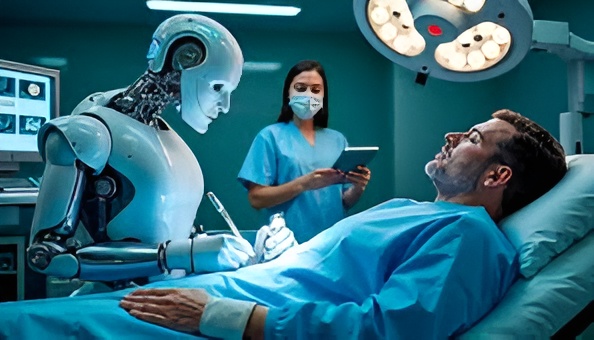
⚙️ What Are AI-Powered Robot Surgeons?
AI-powered robot surgeons are surgical systems equipped with AI algorithms that guide, assist, or even perform parts of surgeries with superhuman precision. These systems integrate:
- Real-time image recognition and analysis of the surgical field. Lippincott Journals+2PubMed Central+2
- Motion control for robotic arms that move with far smaller margins of error than a human hand. iam-media.com+1
- Predictive analytics that help anticipate tissue behavior, bleeding, or complications during the operation. NVIDIA Developer+1
- Integration with data from AI diagnostic systems (think of the “AI doctors” that propose diagnosis and now the robot executes with exactness).
Put simply: where an AI medical diagnosis tool might flag a region of the body for concern (say a tumour), the robotic system helps execute the surgical treatment with unmatched accuracy and finesse.
🏥 Why This Matters for Patients and Healthcare
Several major advantages arise when AI and robotics join forces in surgery:
- Minimally invasive procedures: The combination of high-definition cameras, robotic precision, and AI analysis allows for smaller incisions, less tissue damage, and faster healing.
- Reduced hospital stays: Because surgeries are more precise, patients recover more quickly, face fewer complications, and often go home sooner.
- Improved outcomes: With AI assisting to identify critical structures, avoid nerves and blood vessels, and optimize the surgical plan, errors decline and success rates rise. PubMed Central+1
- Access to expertise: In some cases, the robot/AI pairing enables surgeons to perform highly complex operations they simply couldn’t have done as safely or effectively on their own.
- AI-driven adaptation: The robot can use data in real time, adapt movements, and even predict when a tool needs switching or a path needs adjusting. malonecenter.jhu.edu+1
🔍 Real-World Breakthroughs
Several landmark developments showcase the promise of AI-powered robotic surgery:
- Researchers at Johns Hopkins University trained an AI model on hours of surgery videos and robotic executions; the robot then performed a gallbladder removal procedure with 100% success in a controlled experiment—an important milestone for autonomous surgery. The Hub+1
- A review article in medical literature notes that AI in robotic surgery is already automating tasks such as suturing, tissue dissection, and recognising surgical anatomy in real time. ACS+1
- The global trend shows hospitals adopting robotic-assisted platforms (such as the da Vinci system) augmented with AI modules to guide movements and improve precision. Wikipedia
🧬 How the Process Works (Step by Step)
Here’s a simplified workflow of how an AI doctor + robot surgeon pair might operate:
- Pre-operative AI Diagnostic Phase
- “AI doctors” (diagnostic AI tools) assess scans, imaging, patient data, and identify the surgical target and risk factors.
- Surgical Planning with AI
- The robotic surgery system receives data about optimal incision sites, instrument approach, patient anatomy specific to that person.
- Intra-operative Execution
- The surgeon sits at a console, controlling robotic arms while the AI assists with real-time guidance. The robot arms, sensors and cameras follow the plan with high precision.
- Real-time Monitoring & Adjustment
- AI monitors vital signs, movement, tissue response, instrument feedback; it can alert the surgeon or adjust parameters automatically.
- Conclusion & Recovery
- Smaller incisions, less trauma, less blood loss, lower risk of infection, shorter healing time. Because AI and robot were precise, the patient has better outcomes.
⚠️ Challenges and Considerations
While the promise is enormous, integrating AI-powered robot surgeons still faces several hurdles:
- High development and equipment cost: Robotic systems are expensive and require significant infrastructure. Lippincott Journals+1
- Data quality & training: AI models rely on large datasets of surgery videos and outcomes; poor data can lead to errors or biases. PubMed Central
- Ethical & liability issues: If an autonomous robot makes a mistake, who is liable — the AI, the surgeon, the manufacturer? ScienceDirect+1
- Surgeon training & acceptance: Surgeons must learn to trust the system, interpret its feedback, and intervene when needed.
- Regulatory hurdles: Ensuring safety, gaining approvals, validating autonomous or semi-autonomous systems is complex and ongoing.
🚀 Future Outlook: What’s Next?
- Greater autonomy: Robots will move from assisting to performing full procedures autonomously under human supervision. The Hub+1
- Remote & tele-robotic surgery: Surgeons may operate via console from distant locations, or robots may perform tasks in underserved areas under remote supervision.
- Personalised robotic surgery: AI will tailor the robotic movements, tool selection, and surgical path based on the individual patient’s anatomy and health profile.
- Hybrid AI-robot systems: Diagnostic AI (“AI doctors”) feed into surgical AI (“robot surgeons”), making diagnosis-to-treatment seamless and data-driven.
- Reduced cost and broader access: As the technology matures, costs will decline and more hospitals (including in remote or under-resourced regions) will adopt AI-robot surgery.
✅ Final Thoughts
The era of AI doctors and robot surgeons marks a profound shift in how medical treatment is delivered. Instead of the surgeon relying purely on human skill and experience, they now harness the power of AI-driven data and robotic precision. This combination makes surgeries:
- Less invasive
- Faster
- Safer
- More personalised
As this trend grows, patients can anticipate better outcomes, shorter recoveries, and more consistent results — regardless of where they receive treatment.
4️⃣ Virtual AI Doctors in Telemedicine
Telehealth is growing fast. Soon patients will consult AI doctors anytime from home, eliminating long hospital queues. These AI assistants can answer health questions, analyze symptoms, and provide fast medical guidance.
5️⃣ Faster Medical Imaging Analysis
AI doctors can study CT scans, MRIs, and X-rays much faster than humans — sometimes in seconds. They will help radiologists detect hidden abnormalities early, reducing medical errors and saving lives.
6️⃣ Predictive Healthcare & Early Prevention
Using AI, hospitals can predict disease risks before symptoms appear. For example:
- Heart attack prediction
- Stroke risk detection
- Diabetes prevention plans
This allows doctors to take preventive actions for better long-term health.
7️⃣ Enhanced Patient Monitoring
Wearable sensors and AI-powered apps will continuously track patient health at home. The moment something is wrong, AI doctors will alert real doctors and caregivers — preventing emergencies.
8️⃣ AI Assistance for Rural Healthcare
Shortage of doctors is a global issue, especially in rural areas. Artificial intelligence doctors will help bridge this gap by:
- Offering remote diagnoses
- Providing basic healthcare consultations
- Supporting frontline health workers
This ensures more people receive proper treatment on time.
9️⃣ Improved Mental Health Diagnostics
AI doctors can analyze voice tone, facial expressions, and behavior patterns to detect mental health conditions such as:
- Depression
- Anxiety
- Stress-related disorders
This leads to timely counseling and effective therapy support.
🔟 Drug Discovery and Treatment Innovation
AI is drastically reducing the time required to develop new medicines. Advanced algorithms can:
- Identify disease-causing genes
- Predict how a drug will work
- Suggest new treatment solutions
This could accelerate cures for diseases like cancer and Alzheimer’s.
✅ Final Thoughts
AI doctors are not replacing human doctors.
Instead, they serve as powerful assistants to:
- Increase accuracy
- Reduce errors
- Speed up diagnosis
- Improve patient care
The future of healthcare is a smart partnership between humans and intelligent machines — working together for healthier lives more know click here http://decodeai.blog

woh I like your content, saved to bookmarks! .
thanks
I needed to create you one bit of word in order to give thanks once again for your striking basics you’ve shared here. This is so pretty generous with you to deliver unreservedly all that a number of us might have distributed as an e book to generate some bucks on their own, mostly considering that you could have tried it if you ever wanted. The strategies in addition acted to become good way to be sure that other individuals have a similar dream similar to my very own to know significantly more on the topic of this condition. I believe there are numerous more fun moments up front for individuals that look over your blog post.