
AI Medical Diagnosis Tools
introduction AI Medical Diagnosis
Artificial Intelligence (AI) is reshaping the world of healthcare faster than ever before. From analyzing X-rays to predicting diseases, AI medical diagnosis tools are helping doctors make quicker, more accurate, and life-saving decisions. In 2025, these smart technologies are not just futuristic concepts — they are part of everyday medical practice AI Medical Diagnosis.
Let’s explore the top 10 AI medical diagnosis tools that are revolutionizing healthcare this year.
1. IBM Watson Health
n the fast-evolving world of healthcare technology, few names stand out as much as IBM Watson Health. Recognized as a trailblazer in AI medical diagnosis, Watson Health represents how artificial intelligence, data analytics, and human expertise can work together to improve medical decision-making and patient outcomes. Since its debut, it has pushed the boundaries of what’s possible in AI and medical diagnosis, helping doctors, hospitals, and researchers turn complex data into meaningful insights AI Medical Diagnosis.
🔍 What Is IBM Watson Health?
IBM Watson Health is a division of IBM that leverages artificial intelligence (AI), machine learning (ML), and natural language processing (NLP) to analyze vast amounts of medical data. The platform was built on IBM’s world-famous Watson AI, which gained attention for defeating human champions on the game show Jeopardy!—and later found its purpose in solving real-world medical challenges.
In healthcare, data is everything — from patient records and lab results to imaging scans and research journals. Watson Health’s mission is to organize this data, interpret it, and provide clinicians with AI-driven recommendations that support more accurate diagnoses and treatment decisions AI Medical Diagnosis.
🧬 How IBM Watson Health Works in Medical Diagnosis
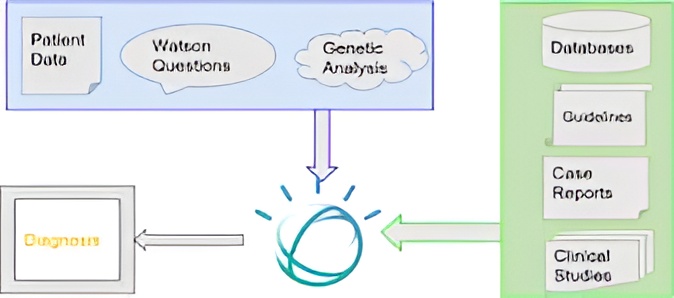
Watson Health uses AI algorithms capable of processing both structured data (like test results and EHRs) and unstructured data (like doctor’s notes and medical literature). Through natural language processing, the system understands and extracts key information from complex medical texts AI Medical Diagnosis.
When a doctor enters a patient’s symptoms or clinical data, Watson compares this information with millions of similar cases, published studies, and treatment records stored in its database. Within seconds, it provides:
- Probable diagnoses based on medical evidence
- Treatment recommendations aligned with best practices
- Confidence scores indicating how reliable each suggestion is
This process dramatically reduces the time it takes to reach accurate medical conclusions and ensures that no critical data is overlooked.
💡 Key Features of IBM Watson Health
1. AI-Based Clinical Decision Support
Watson Health’s most remarkable feature is its AI-driven clinical decision support system (CDSS). It assists physicians by evaluating thousands of data points per patient and identifying potential conditions or risks that might otherwise be missed. This tool is especially valuable in oncology, cardiology, and rare disease diagnosis.
2. Natural Language Processing
Medical language is complex and often filled with abbreviations, synonyms, and context-dependent meanings. Watson’s NLP technology understands human language, making it capable of reading and interpreting radiology reports, pathology notes, and research papers — a task nearly impossible for traditional algorithms.
3. Integration with Electronic Health Records (EHR)
Watson integrates seamlessly with existing hospital systems. It can pull real-time patient data from EHRs and provide actionable insights directly within the physician’s workflow. This saves valuable time and ensures that diagnostic recommendations are based on the most current information available.
4. Data-Driven Predictive Analytics
By identifying trends and patterns within massive datasets, Watson can predict disease risks before symptoms fully appear. This predictive power is transforming preventive healthcare and early intervention strategies.
5. Personalized Medicine
Each patient is unique — and so is their genetic makeup. Watson Health uses genomic analysis to recommend personalized treatment plans, especially in oncology. By analyzing DNA data and comparing it to clinical trial results, it helps oncologists choose the most effective therapies for individual patients.
🩺 Real-World Applications in AI Medical Diagnosis
1. Oncology
Watson for Oncology, developed in collaboration with Memorial Sloan Kettering Cancer Center, uses AI to assist oncologists in diagnosing and treating different types of cancer. The system compares a patient’s case with medical literature and clinical trials, then suggests evidence-based treatment options. It’s already used in hospitals across the U.S., India, South Korea, and Thailand.
2. Radiology
Watson Imaging AI supports radiologists in interpreting MRI, CT, and X-ray images. By identifying abnormalities that human eyes might miss, it reduces diagnostic errors and increases efficiency in imaging departments.
3. Clinical Research
Researchers use Watson Health to analyze large-scale datasets for drug discovery and clinical trial matching. The AI identifies patient populations suited for specific studies, helping speed up medical innovation.
4. Cardiology and Chronic Disease Management
Watson’s predictive capabilities allow doctors to monitor chronic conditions such as diabetes or heart disease. It can alert healthcare providers to early warning signs, supporting proactive patient care.
📈 Benefits of IBM Watson Health
- Enhanced Diagnostic Accuracy:
AI algorithms help doctors confirm diagnoses with confidence by comparing millions of similar medical cases. - Time Efficiency:
Complex diagnoses that once took hours can now be completed in minutes. - Data-Driven Insights:
Watson provides physicians with recommendations backed by the latest scientific evidence and clinical trials. - Reduced Human Error:
AI minimizes oversight caused by fatigue or data overload. - Personalized Care:
Watson enables doctors to tailor treatment based on each patient’s medical history and genetic profile. - Improved Access to Healthcare:
Through cloud-based solutions, Watson’s AI tools can be used in remote areas, making advanced diagnostics accessible to more patients.
⚖️ Challenges and Criticisms
While IBM Watson Health has achieved remarkable progress, it has also faced challenges. Some early projects, particularly in oncology, struggled with data accuracy and inconsistent performance across hospitals. Critics argue that AI and medical diagnosis require constant updates and validation to ensure reliability.
IBM has since refined its algorithms, partnered with more hospitals, and shifted focus toward evidence-based AI models to overcome these issues.
🚀 The Future of IBM Watson Health
As we move deeper into 2025, IBM Watson Health continues to evolve. Its emphasis on cloud computing, interoperability, and federated learning will enable even more powerful diagnostic models. With the integration of generative AI, Watson will not just analyze existing data but also generate new medical insights — a leap that could redefine healthcare as we know it.
🩻 Final Thoughts
IBM Watson Health remains a cornerstone in the advancement of AI medical diagnosis. Despite its challenges, it has proven that when artificial intelligence meets human expertise, healthcare can reach extraordinary levels of precision and compassion.
In the coming years, as data becomes even more central to medicine, tools like Watson will help bridge the gap between information overload and intelligent, patient-centered care — making AI and medical diagnosis not just a trend, but the foundation of modern healthcare.
2. Google DeepMind Health
When it comes to the fusion of artificial intelligence and healthcare, Google DeepMind Health stands at the forefront of innovation. Known for pioneering breakthroughs in AI medical diagnosis, DeepMind has transformed how doctors detect, analyze, and predict diseases. Its ability to process massive amounts of medical data and interpret complex patterns with near-human accuracy has made it one of the most trusted AI healthcare platforms in the world.
In 2025, DeepMind continues to revolutionize AI and medical diagnosis, bringing accuracy, speed, and accessibility to medical imaging, disease detection, and clinical decision-making.
🌐 What Is Google DeepMind Health?
Google DeepMind Health is a specialized division within Google’s AI research arm, focusing on developing artificial intelligence systems that can solve complex medical and biological problems. Founded in London, DeepMind gained global attention when its AI defeated world champions in the strategic board game Go. But its most meaningful impact lies in healthcare — particularly in creating algorithms that can interpret medical data just as accurately as, or even better than, human specialists.
By collaborating with major hospitals, including the UK’s National Health Service (NHS), DeepMind has developed AI systems that read medical scans, detect abnormalities, and predict disease progression — all while reducing diagnostic errors.
🧠 The Role of DeepMind in AI Medical Diagnosis
The strength of DeepMind’s AI lies in its deep learning neural networks — algorithms modeled after the human brain. These systems learn from millions of medical images and health records to identify patterns invisible to human eyes. The result is AI medical diagnosis that is not only faster but also more reliable.
DeepMind’s goal isn’t to replace doctors but to augment their capabilities. By using AI to assist in diagnosis, healthcare professionals can spend more time focusing on treatment and patient care.
🩺 Key Innovations and Research Breakthroughs
1. Early Detection of Diabetic Retinopathy
One of DeepMind’s most remarkable achievements is in ophthalmology, specifically the early detection of diabetic retinopathy — a leading cause of blindness. In partnership with Moorfields Eye Hospital in London, DeepMind developed an AI system that can analyze 3D retinal scans and detect more than 50 different eye conditions with accuracy comparable to leading ophthalmologists.
Why It Matters:
- Traditional eye scans require manual interpretation, which is time-consuming.
- DeepMind’s AI can diagnose conditions like glaucoma and macular degeneration in seconds.
- Early detection prevents irreversible vision loss and improves patient outcomes.
This innovation has already been deployed in clinical trials and is expanding to hospitals worldwide.
2. AI-Assisted Breast Cancer Screening
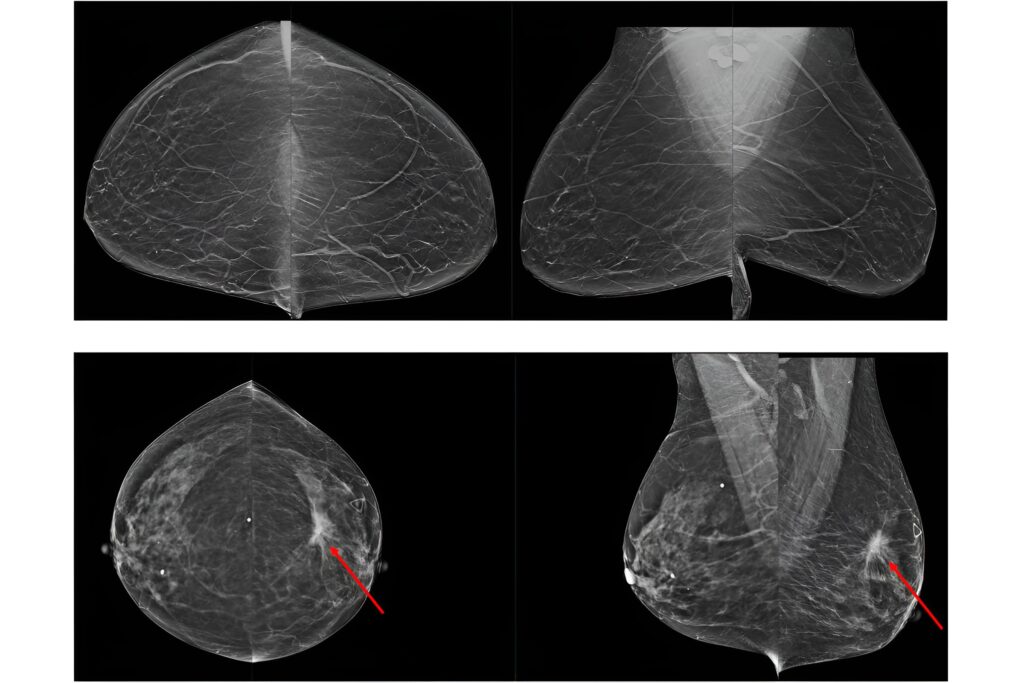
Breast cancer is one of the most common cancers among women globally, and early detection is critical. DeepMind collaborated with Google Health and several medical institutions to create an AI model for mammogram analysis. The results were groundbreaking — the system outperformed human radiologists in detecting breast cancer across multiple datasets from the U.S. and U.K.
Key Achievements:
- Reduced false positives and false negatives compared to human screening.
- Improved early detection rates by identifying subtle tissue changes.
- Provided consistent results across different imaging equipment and hospitals.
This research demonstrated the real-world potential of AI and medical diagnosis to save lives through precision screening more know click here…https://www.breastcancer.org/screening-testing/artificial-intelligence
3. Predictive Analytics for Organ Function and Disease Progression
Another area where DeepMind excels is predictive healthcare. Using AI algorithms, the company developed models capable of predicting acute kidney injury (AKI) up to 48 hours before it occurs. This advancement was made possible through collaboration with the U.S. Department of Veterans Affairs.
Highlights:
- Early warning systems notify doctors of patients at high risk.
- Enables preventive action and reduces hospitalization costs.
- Improves patient recovery rates by preventing critical organ damage.
Such predictive systems represent a major leap forward in AI medical diagnosis, allowing doctors to shift from reactive to proactive care.
⚙️ Core Technologies Powering DeepMind Health
- Deep Learning Neural Networks:
The foundation of DeepMind’s system, capable of recognizing visual patterns in complex medical images. - Reinforcement Learning:
Enables AI to “learn” through trial and error, constantly improving its diagnostic precision. - Natural Language Processing (NLP):
Used to interpret medical reports, research articles, and clinical notes — a vital component of AI and medical diagnosis. - Federated Learning:
Allows hospitals to share AI insights without sharing sensitive patient data, enhancing privacy and collaboration.
🧬 Real-World Applications in Hospitals
DeepMind’s technologies have been tested in real-world hospital settings, leading to measurable results in patient care.
- Moorfields Eye Hospital (UK): AI system detects eye diseases and recommends referrals with 94% accuracy.
- Royal Free Hospital (London): AI algorithm predicts kidney failure, giving clinicians more time to intervene.
- University College London Hospital (UCLH): DeepMind is researching ways AI can optimize radiation therapy for cancer patients.
These collaborations have proven that AI can seamlessly integrate into clinical workflows, improving diagnosis speed and consistency.
🌍 Impact of DeepMind on Global Healthcare
The influence of DeepMind Health extends far beyond the UK. Its technologies are being adapted globally to address diagnostic inequality — the gap between advanced and developing healthcare systems.
By offering scalable, cloud-based solutions, DeepMind enables smaller hospitals and clinics to access cutting-edge AI medical diagnosis tools without needing expensive equipment or specialists.
Key Benefits:
- Faster and more accurate diagnosis in rural areas.
- Reduced burden on overworked healthcare professionals.
- Cost-effective solutions for under-resourced hospitals.
⚖️ Ethical Considerations and Challenges
Like all AI systems in healthcare, DeepMind’s work raises ethical concerns. Data privacy, algorithmic bias, and transparency remain top priorities. In past collaborations, DeepMind faced criticism for data-sharing practices, prompting Google to enforce stricter compliance with patient data protection laws such as GDPR and HIPAA.
Today, DeepMind emphasizes ethical AI — ensuring that medical data is anonymized, securely stored, and used only for improving healthcare outcomes.
🚀 The Future of DeepMind Health
In 2025 and beyond, Google DeepMind aims to expand its influence into genomics, drug discovery, and predictive disease modeling. Its latest advancements in AlphaFold, an AI system that predicts protein structures, are already accelerating biomedical research at an unprecedented rate.
With each new innovation, DeepMind pushes AI and medical diagnosis closer to a future where technology helps doctors make faster, more precise, and more humane decisions.
3. PathAI
PathAI uses deep learning to assist pathologists in diagnosing diseases more accurately. By analyzing tissue samples, it reduces human error and speeds up cancer detection.
Why It Stands Out:
- AI pathology analysis
- Real-time image classification
- Increased diagnostic accuracy
4. Aidoc
In today’s fast-paced healthcare environment, time is the difference between life and death. Radiologists face an overwhelming number of medical images daily, from CT scans to MRIs — each requiring precision and quick interpretation. This is where Aidoc, a leader in AI medical diagnosis, steps in to revolutionize radiology with real-time, AI-powered image analysis.
Aidoc’s advanced algorithms act as a second pair of eyes for doctors, flagging critical abnormalities instantly and streamlining hospital workflows. As of 2025, Aidoc has become one of the most trusted platforms in AI and medical diagnosis, empowering radiologists to make faster, more accurate decisions and improving patient outcomes worldwide.
⚙️ What Is Aidoc?
Aidoc is an artificial intelligence company specializing in AI-powered radiology diagnostics. Founded in 2016 and headquartered in Tel Aviv, Israel, Aidoc has developed deep learning models trained on millions of annotated medical images. These models analyze radiological scans in real time, helping medical teams identify potential issues such as internal bleeding, fractures, pulmonary embolisms, and strokes.
Unlike traditional diagnostic software, Aidoc doesn’t replace radiologists — it enhances their work. By prioritizing urgent cases, the platform ensures that patients with life-threatening conditions receive immediate attention. This is a game-changer in emergency departments where every minute matters.
🧠 How Aidoc’s AI Works
Aidoc’s strength lies in its deep learning algorithms that mimic human visual interpretation but with greater speed and consistency. Once a CT or MRI scan is uploaded to the hospital’s Picture Archiving and Communication System (PACS), Aidoc’s AI analyzes the images almost instantly.
The software identifies suspicious regions, marks them with visual indicators, and sends alerts to radiologists. This enables the medical team to focus on the most urgent findings first — a workflow that significantly reduces diagnosis time and improves patient safety.
The Process in Simple Steps:
- The patient’s medical scan is uploaded into the PACS system AI Medical Diagnosis.
- Aidoc’s AI automatically detects and prioritizes abnormalities AI Medical Diagnosis.
- Radiologists receive real-time alerts on desktop or mobile devices AI Medical Diagnosis.
- Doctors confirm or rule out findings, ensuring accurate and timely care AI Medical Diagnosis.
This level of automation and efficiency makes Aidoc one of the most advanced solutions in the field of AI and medical diagnosis today AI Medical Diagnosis.
🩺 Key Features of Aidoc
1. Instant Alerts for Urgent Findings
Aidoc automatically detects critical abnormalities — such as brain hemorrhages, pulmonary embolisms, or cervical spine fractures — and sends instant notifications to the medical team. These alerts allow radiologists to review life-threatening cases immediately, reducing the risk of delayed treatment AI Medical Diagnosis.
2. Seamless Integration with PACS Systems
One of Aidoc’s greatest strengths is its smooth integration with existing hospital infrastructure. It works directly with PACS and RIS (Radiology Information Systems), allowing hospitals to adopt AI diagnostics without overhauling their systems. The AI runs silently in the background, analyzing scans in parallel with normal operations.
3. FDA-Approved AI Modules
Aidoc is one of the few companies with multiple FDA-cleared AI modules for clinical use. These modules cover a wide range of diagnostic areas, including:
- Intracranial hemorrhage detection
- Pulmonary embolism detection
- Cervical spine fracture identification
- Large vessel occlusion detection in stroke cases
Each module undergoes rigorous testing and clinical validation to ensure safety and accuracy, reinforcing Aidoc’s credibility as a leader in AI medical diagnosis.
4. Prioritization and Workflow Optimization
Aidoc doesn’t just identify findings — it helps manage the entire workflow. The platform prioritizes critical cases in the radiologist’s queue, ensuring that emergencies are handled before routine cases. This efficient triage system enhances productivity and reduces diagnostic backlogs.
5. Multimodal and Multi-Condition Support
Unlike some AI tools limited to a single organ or imaging type, Aidoc supports multiple imaging modalities (CT, MRI, and X-ray) and can detect various pathologies simultaneously. This makes it a comprehensive AI solution for radiology departments AI Medical Diagnosis.
💡 Real-World Applications
Aidoc’s technology is used in over 1,000 hospitals worldwide, including leading institutions in the U.S., Europe, and Asia. Some of its most common applications include:
- Emergency Rooms: Detecting brain bleeds, lung blockages, or fractures in trauma patients.
- Stroke Units: Identifying early signs of stroke and alerting neurologists instantly.
- Pulmonary Care: Detecting pulmonary embolisms before they become fatal.
- Oncology Imaging: Flagging abnormalities that may indicate metastasis or tumor recurrence.
In each setting, Aidoc helps doctors act faster, reduces diagnostic errors, and improves patient outcomes.
🧬 Clinical Impact and Accuracy
Numerous clinical studies have confirmed Aidoc’s ability to achieve radiologist-level accuracy in detecting various medical conditions. Hospitals using Aidoc have reported:
- Up to 50% reduction in report turnaround time.
- 25% faster detection of critical pathologies.
- A significant decrease in missed diagnoses for emergency cases.
These outcomes demonstrate that AI, when properly integrated, can serve as a powerful extension of the human diagnostic process AI Medical Diagnosis.
🌍 Global Reach and Recognition
Aidoc’s influence has expanded far beyond its Israeli roots. It is now a global leader in AI medical diagnosis, serving hospitals across North America, Europe, and Asia-Pacific. The company has received numerous awards, including AI Medical Diagnosis:
- Frost & Sullivan Best Practices Award for AI in Healthcare
- Recognition by CB Insights’ AI 100 as one of the world’s most innovative AI startups
- Partnerships with healthcare giants such as Siemens Healthineers and GE Healthcare
These collaborations help Aidoc continuously refine its technology and reach more healthcare systems worldwide.
⚖️ Ethical and Regulatory Considerations
Aidoc operates under strict compliance with international healthcare standards, including HIPAA in the U.S. and GDPR in Europe. The company prioritizes patient data privacy, transparency in AI decision-making, and clinical accountability AI Medical Diagnosis.
Unlike black-box AI models, Aidoc provides explainable AI outputs, showing doctors exactly what the algorithm identified. This transparency builds trust and ensures that final diagnostic responsibility always remains with human clinicians AI Medical Diagnosis.
🚀 The Future of Aidoc and AI in Radiology
In 2025 and beyond, Aidoc continues to expand its portfolio with new AI modules targeting cardiovascular diseases, abdominal imaging, and musculoskeletal conditions. The integration of generative AI and predictive analytics is also underway, allowing the system not just to detect issues but to forecast potential complications before they occur AI Medical Diagnosis.
Aidoc’s ultimate goal is to create a fully AI-assisted diagnostic ecosystem, where every scan contributes to smarter, faster, and safer healthcare delivery AI Medical Diagnosis.
5. Tempus
Tempus combines AI, genomic data, and clinical information to deliver precision medicine. Its diagnostic tools assist doctors in customizing cancer treatments for individual patients.
Main Advantages:
- AI-driven genomic analysis
- Personalized therapy recommendations
- Integration with hospital EHR systems
6. Zebra Medical Vision
Zebra Medical Vision uses AI to interpret medical imaging data and detect diseases like liver conditions, bone health issues, and cardiovascular risks.
Unique Features:
- Automated X-ray and CT scan analysis
- Cloud-based diagnosis
- Scalable solution for hospitals AI Medical Diagnosis
7. Butterfly Network
The Butterfly iQ+ uses AI-powered handheld ultrasound technology, allowing doctors to perform diagnostic imaging from anywhere. It’s especially useful in rural or low-resource areas.
Top Features:
- Portable and affordable ultrasound
- AI-assisted scan interpretation
- Cloud connectivity for remote diagnosis AI Medical Diagnosis
8. Qure.ai
Qure.ai, an India-based startup, is transforming healthcare with AI tools for radiology and tuberculosis screening. It provides fast AI Medical Diagnosis.,http://decodeai.blog
It is helpful bloging
IBM Topic is very helpful content