
The way humans interact with technology has changed dramatically over the past decade. From talking to voice assistants to collaborating with AI-powered tools, AI human interaction is reshaping how we communicate, learn, and connect. With the rapid growth of conversational AI and advances in Human-Computer Interaction (HCI), the boundary between humans and machines is becoming more seamless and natural.
Let’s explore 7 powerful ways these technologies are transforming communication and redefining human connection in the digital era AI Human Interaction
1. More Natural Conversations with Machines
Gone are the days when interacting with a computer meant memorizing commands, clicking through menus, or typing in short, mechanical phrases. Today, we simply speak, type, or gesture—and machines respond as if they truly understand us. This transformation lies at the heart of AI human interaction, driven by breakthroughs in Conversational AI and Human-Computer Interaction (HCI).
Machines are no longer just tools; they’re becoming companions, collaborators, and communicators. Virtual assistants like ChatGPT, Alexa, Siri, and Google Assistant are now capable of holding meaningful dialogues, recognizing tone and context, and even sensing emotional cues. As a result, communication with technology feels less robotic and more human every day.

From Commands to Conversations
In the early years of computing, human-computer communication was purely functional. You told the machine exactly what to do, using predefined commands. If your syntax was slightly off, the computer simply didn’t understand. The exchange was efficient, but cold and rigid AI Human Interaction
Then came the revolution of Conversational AI, a technology designed to let machines understand human language naturally—just the way people talk to each other. Instead of “Search weather Delhi 6 AM,” users can now say, “Hey Google, what’s the weather going to be like tomorrow morning?” and get a detailed, context-aware answer AI Human Interaction.
This evolution from command-based input to natural conversation represents a paradigm shift in HCI. Instead of humans adapting to machine logic, machines are adapting to human language and behavior AI Human Interaction.
Understanding Context and Intent
The biggest leap forward in AI communication has been the ability to grasp context and intent. Modern conversational systems powered by advanced models like GPT and Gemini can understand not only what is said, but also what is meant.
For example, when you say to your assistant, “I’m feeling cold,” the AI might suggest increasing the thermostat or playing cozy music. It recognizes the emotion and implied intent behind your words, not just the literal phrase.
This ability to infer meaning makes AI conversations smoother and more intuitive. Instead of responding with generic or repetitive answers, systems can now tailor responses to your tone, situation, and needs. The result? A more natural flow that mirrors genuine human dialogue.
Emotional Awareness and Empathy
Emotions are at the heart of human communication. Recognizing this, developers are integrating affective computing—technology that helps AI identify and respond to emotional states. Using data from voice inflections, text sentiment, facial expressions, or even pauses in speech, AI systems can detect when someone is happy, frustrated, or sad AI Human Interaction.
Consider this example: a customer contacts a chatbot and types, “I’ve been trying to get help for two days!” The AI, recognizing the user’s frustration, can respond empathetically—“I’m really sorry for the delay; let’s fix this right away.” This kind of response builds trust and emotional connection—something impossible in the early years of automation AI Human Interaction.
As AI grows more emotionally intelligent, human-computer interaction feels less transactional and more relational. It’s not about technology replacing empathy; it’s about technology learning how to reflect it AI Human Interaction.
The Science Behind Natural Conversation
The secret to these natural dialogues lies in Natural Language Processing (NLP), a field that enables AI to understand grammar, semantics, and the subtle nuances of communication.
Modern NLP systems are powered by deep learning and transformer-based models that analyze billions of language patterns. This allows AI to interpret idioms, humor, and even sarcasm—challenges that once seemed unsolvable AI Human Interaction.
For example:
- If you say, “I could eat a horse,” a modern AI doesn’t take it literally—it understands you’re simply very hungry.
- If you joke, “Well, that went great,” after a failure, it can detect the sarcasm from tone and context.
This ability to interpret subtext is what gives conversational AI its human-like fluency. It no longer reacts mechanically; it responds conversationally.
Voice as the New Interface
Human conversation is inherently vocal, and AI is now mastering the art of voice interaction. Voice assistants have become part of daily life—helping users navigate traffic, control home devices, or find quick answers hands-free.
Voice interfaces are more than just convenient; they’re transforming accessibility. For people who can’t easily type or read screens, voice becomes a natural bridge to digital technology.
What’s even more remarkable is how AI systems now adapt their tone and personality. They can sound cheerful, formal, or calm depending on context. This creates a sense of familiarity—making technology feel like a helpful companion rather than a machine AI Human Interaction.
Personalization: The Key to Natural Connection
Another reason AI conversations feel increasingly human is personalization. AI doesn’t treat everyone the same—it learns from each user’s habits, speech patterns, and preferences AI Human Interaction.
If you frequently ask about sports scores, your virtual assistant might start giving you updates proactively. If you prefer concise answers, it will adjust its response length. Over time, the system becomes a reflection of your communication style, making interactions feel more fluid and customized AI Human Interaction.
This learning process is part of a larger HCI principle: technology that adapts to the user, not the other way around AI Human Interaction.
Challenges in Building Human-Like AI
Despite impressive progress, perfecting natural communication with machines isn’t easy. AI still struggles with subtle human elements like sarcasm, humor, and cultural nuance. What’s funny or polite in one language may sound rude or confusing in another.
There’s also the ethical challenge of creating AI that feels “too human.” Should a machine sound empathetic if it doesn’t truly feel emotion? Should it always reveal that it’s artificial? Researchers in ethical AI and HCI design are actively exploring these questions to ensure that natural interaction remains both authentic and transparent AI Human Interaction.
The Future of Conversational AI
The next phase of AI human interaction will go beyond voice and text. Future systems will integrate gestures, facial recognition, and augmented reality (AR) to create fully immersive communication experiences. Imagine a world where your device can recognize your facial expression, sense your frustration, and adjust its tone in real time—or where virtual assistants appear as 3D avatars who talk, listen, and react naturally AI Human Interaction.
As this technology evolves, communication with AI will feel less like using a tool and more like engaging with a digital companion—one that listens, learns, and understands you more to know…https://www.verloop.io/blog/conversational-customer-engagement/
Conclusion
The rise of more natural conversations with machines marks one of the most transformative shifts in human history. Through Conversational AI, NLP, and HCI innovations, machines are learning to speak our language—not just linguistically, but emotionally and contextually AI Human Interaction.
What began as cold commands has evolved into warm conversations. And in that shift, technology has moved closer than ever to the human heart of communication AI Human Interaction.
We’re entering an age where talking to machines feels as natural as talking to people—and that’s not just technological progress; it’s a redefinition of connection itself AI Human Interaction.
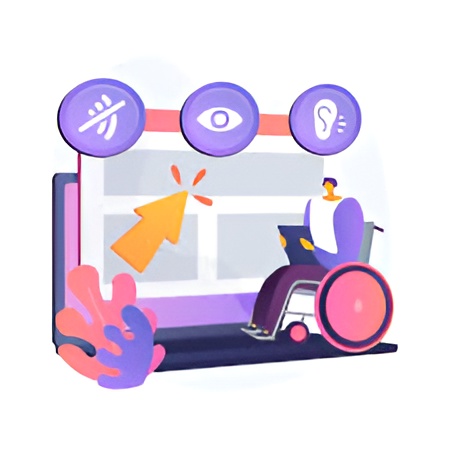
2. Enhancing Accessibility for Everyone
One of the most inspiring impacts of artificial intelligence is its ability to break barriers — physical, linguistic, and cognitive — that have traditionally limited human communication. Through advances in AI human interaction, Conversational AI, and Human-Computer Interaction (HCI), technology is becoming more inclusive and empathetic than ever before.
From helping people with disabilities to enabling cross-language conversations in real time, AI is ensuring that no one is left behind in the digital revolution. The focus is no longer just on creating smarter machines, but on building a more connected and accessible world.
The Role of AI in Accessibility
Accessibility is about making technology usable for everyone — regardless of age, ability, or background. For decades, people with visual, auditory, or motor challenges faced significant barriers when using computers or mobile devices.
AI has changed that story. With the help of speech recognition, computer vision, predictive text, and assistive chatbots, individuals can now engage with technology using natural human input — voice, gestures, and even emotions.
This is where AI human interaction becomes a bridge between technology and human diversity. By allowing machines to understand the nuances of speech, language, and physical expression, AI empowers users who might otherwise be excluded from digital communication.
Speech-to-Text: Giving Voice to the Voiceless
One of the most powerful examples of AI improving accessibility is speech-to-text technology. This system converts spoken language into written text in real time — a crucial tool for people with hearing impairments or speech difficulties.
Applications like Google Live Transcribe, Otter.ai, and Microsoft Azure Speech Services provide real-time captions during conversations, meetings, or lectures. Students with hearing loss can now participate in classroom discussions. Professionals can join conference calls without missing key details.
Beyond disability support, speech-to-text has also become an everyday accessibility tool for millions of users. People use it to take notes hands-free, compose messages while driving, or record ideas instantly. The technology, born out of inclusivity, has become part of mainstream communication.
Text-to-Speech: Hearing the Written Word
On the other end of the spectrum lies text-to-speech (TTS) — an AI-powered system that reads written text aloud. This technology has revolutionized life for individuals with visual impairments or reading difficulties such as dyslexia.
Modern AI-driven voices are no longer robotic or monotonous; they sound natural, expressive, and context-aware. They can adjust tone, pitch, and rhythm to suit the content — whether reading a storybook to a child or narrating a research paper to a student.
TTS also makes information accessible in new ways. People can now “listen” to emails, news articles, or e-books while commuting or multitasking. What started as a tool for accessibility has evolved into a universal communication feature that benefits everyone.
Real-Time Translation: Bridging Language Gaps
Language has always been one of humanity’s biggest communication barriers. But with AI-powered translation systems, those walls are crumbling. Tools like Google Translate, DeepL, and Microsoft Translator use machine learning and natural language understanding to provide real-time, contextually accurate translations.
Imagine two people from opposite sides of the world, speaking completely different languages, having a fluid, spoken conversation — and both understanding each other instantly. That’s no longer fiction. It’s happening in classrooms, hospitals, and workplaces worldwide.
Real-time translation isn’t just convenient — it’s transformative. It allows migrants to communicate in new countries, travelers to navigate foreign cultures, and international teams to collaborate without barriers. By merging AI human interaction and linguistic intelligence, technology is making global communication truly universal.
Computer Vision: Empowering the Visually Impaired
Computer vision, another branch of AI, enables machines to “see” and interpret the world through cameras and image recognition. For people with visual impairments, this technology is life-changing.
Apps like Seeing AI (by Microsoft) and Be My Eyes use AI to describe surroundings, read printed text aloud, identify products, and even recognize faces. These systems give users more independence, helping them navigate daily life with greater confidence.
What’s remarkable is how seamlessly these applications integrate with natural language. Instead of technical prompts, users can simply ask, “What’s in front of me?” or “Read this label.” This combination of Conversational AI and computer vision redefines accessibility — making interaction intuitive and human-like.
AI in Education: Inclusive Learning for All
In classrooms and universities, AI-powered tools are creating equal learning opportunities. Adaptive learning platforms can analyze how students interact with content and tailor lessons to suit their pace and comprehension level.
For students with learning disabilities or attention challenges, AI tutors provide extra support — explaining concepts differently, breaking down complex ideas, or offering feedback in real time. Tools like Grammarly, ChatGPT, and Google Classroom AI assistants enhance understanding and engagement.
This individualized approach transforms education from a one-size-fits-all model into a personalized learning experience. Every student, regardless of ability or background, can thrive at their own rhythm.
Conversational AI for Mental Health and Emotional Support
Accessibility isn’t just about physical or linguistic barriers — it’s also about emotional access. Many people struggle to express their feelings or seek help due to stigma or fear. Conversational AI chatbots, such as Woebot and Wysa, provide safe, judgment-free spaces for users to talk about their emotions.
These AI systems are trained in empathetic communication, using supportive language and cognitive-behavioral therapy techniques to help users manage stress or anxiety. For many, this is the first step toward emotional well-being and human connection.
This shows how AI human interaction can extend beyond information exchange — it can foster empathy and inclusion in ways that were once thought to require human-only understanding.
The Global Impact of Inclusive AI Design
The push for accessibility is reshaping the way developers design systems. Companies are adopting universal design principles — ensuring that accessibility is built into AI systems from the ground up, not added as an afterthought.
Features like voice commands, gesture control, adaptive text size, real-time captions, and multilingual support are now standard components of good design. This shift is not only ethical but also strategic. By making AI inclusive, businesses tap into a wider audience and improve user satisfaction for everyone — because accessible design benefits all users, not just those with disabilities.
The Future: AI That Understands Everyone
Looking ahead, the future of AI human interaction will be one where technology doesn’t just react to disability — it anticipates and adapts to each person’s unique needs.
We’ll see systems that recognize sign language in real time, devices that interpret emotions from facial micro-expressions, and interfaces that adjust automatically for different cognitive abilities.
As Conversational AI becomes more emotionally aware and multimodal (combining voice, touch, and vision), communication will truly transcend barriers. In this future, inclusivity will be built into the DNA of digital communication.
3. Personalized and Context-Aware Experiences
Modern HCI design focuses on personalization. AI systems now learn from user preferences, emotions, and habits to offer tailored responses and recommendations.
Whether it’s a customer support chatbot remembering your last query or a virtual tutor adapting to your learning style, this level of personalization makes digital communication feel more human and intuitive.
4. Emotional Intelligence in AI Systems
Emotionally aware AI is no longer science fiction. With advanced affective computing, AI can recognize human emotions through voice tone, facial expressions, and word choice.
This development allows conversational agents to respond empathetically — comforting users, offering encouragement, or adjusting tone based on mood. Such emotional intelligence deepens trust and strengthens human-AI relationships.
5. Collaboration Between Humans and AI
In workplaces, AI no longer just automates tasks — it collaborates. Teams now rely on AI assistants to manage meetings, summarize discussions, and even provide creative input.
This human-AI collaboration boosts productivity, allowing professionals to focus on strategic thinking while machines handle routine work. The result is a new form of teamwork built on shared intelligence.
6. Redefining Human-Computer Interaction (HCI)
Traditional interfaces like keyboards and screens are being replaced by voice, gesture, and eye-tracking technologies. These innovations make HCI more intuitive and immersive.
Imagine controlling your computer through eye movements or speaking naturally to your device without touching a screen — that’s the next frontier of AI-powered communication.
7. Building Trust and Ethical AI Communication
As AI becomes a daily communication partner, trust and transparency are crucial. Users must understand when they’re talking to a machine and how their data is used.
Ethical design and explainable AI principles ensure that technology enhances — not manipulates — human interaction. This focus on responsibility strengthens the long-term relationship between people and intelligent systems AI Human Interaction.
🌍 The Future of AI Human Interaction
The future of communication lies in collaboration between humans and intelligent systems. Conversational AI and HCI will continue evolving toward more empathy, personalization, and understanding AI Human Interaction.
As AI becomes a trusted companion in our daily lives, the line between human and digital communication will blur — creating a world where technology doesn’t just respond, but truly connects and visit….Blogs
It is so helpful