
Artificial Intelligence (AI) has moved from being a futuristic idea to a powerful driver of today’s digital economy. Businesses across industries are adopting AI software and artificial intelligence tools to automate tasks, enhance decision-making, and improve customer experiences. From startups to Fortune 500 companies, AI is reshaping how we work, think, and innovate.
Let’s explore 10 powerful ways AI software and AI for business are revolutionizing the modern workplace.
1. Automating Repetitive Tasks
In every organization, repetitive tasks consume a large portion of employees’ time and energy. From entering data into spreadsheets and sending follow-up emails to managing inventory and generating daily reports, these routine activities—though necessary—can be both mentally draining and time-consuming. This is where AI software steps in as a revolutionary force, transforming traditional workflows and empowering employees to focus on more meaningful, creative, and strategic aspects of their jobs more to know click here…https://www.inflectra.com/Products/SpiraTest/?utm_source=google-ads&utm_campaign=22962854788&utm_adgroup=184211032279&utm_term=automated%20test%20management&gad_source=1&gad_campaignid=22962854788&gbraid=0AAAAAD9MiruiOgqE1VM-ePHwEm2mpE0_i&gclid=CjwKCAiAlMHIBhAcEiwAZhZBUt_9CN0p9po4Caj7WLqAAOgXpFHdlycnrtfduWBLLDHSZP1hMZqrmxoCRsEQAvD_BwE
The Power of Automation
Automation through artificial intelligence tools has evolved far beyond simple rule-based scripting. Modern AI systems are equipped with machine learning algorithms that can understand context, recognize patterns, and make decisions based on real-time data. For example, instead of manually reviewing hundreds of invoices, an AI-powered accounting system can automatically categorize transactions, flag discrepancies, and even initiate payments once approvals are met. This eliminates human error, speeds up the process, and ensures accuracy.
By automating repetitive tasks, organizations not only save time but also reduce costs associated with manual labor and human oversight. According to studies, businesses that adopt AI-driven automation can boost operational efficiency by up to 40%, allowing teams to reallocate resources toward innovation, customer engagement, and business development.
Examples of Automation in Action
- Data Entry and Processing
Manual data entry is prone to mistakes, especially when dealing with large volumes of information. AI software equipped with optical character recognition (OCR) and natural language processing (NLP) can extract and interpret text from documents, images, and PDFs instantly. For instance, HR departments can automate the extraction of candidate information from resumes or performance reports, saving hours each week. - Email and Communication Management
Tools like AI-driven email assistants can categorize, prioritize, and even respond to common queries. This means that employees spend less time managing their inboxes and more time on high-value communication. Some AI systems even analyze tone and urgency to ensure important messages are addressed first. - Scheduling and Calendar Coordination
AI-powered scheduling assistants such as Google’s Duet AI or Microsoft’s Copilot analyze your preferences and availability to automatically plan meetings. They can even adjust appointments based on priority, time zones, and the availability of participants, eliminating endless back-and-forth emails. - Reporting and Analytics
Instead of manually compiling data into reports, AI analytics tools generate visual dashboards and summaries in seconds. These systems pull information from multiple data sources, identify patterns, and present insights in easy-to-understand formats. This not only saves time but helps businesses make faster, data-backed decisions. - Customer Support and Ticket Management
AI chatbots and virtual agents can handle thousands of routine customer queries simultaneously. Whether it’s tracking an order, resetting a password, or providing product information, these tools work 24/7 without fatigue. Human agents can then focus on complex or emotionally sensitive issues that require empathy and problem-solving skills.
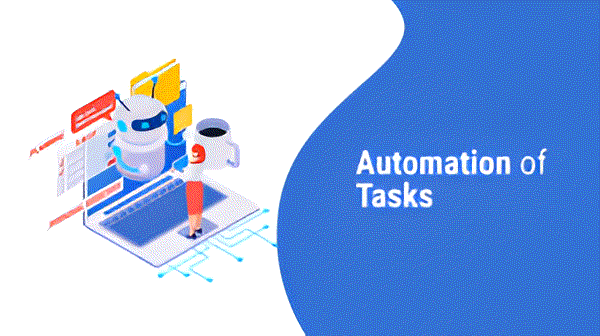
The Human Impact of Automation
Contrary to the common fear that automation replaces jobs, the reality is more balanced. AI doesn’t eliminate the need for humans—it transforms their roles. When employees no longer spend hours doing repetitive work, they can invest time in strategic thinking, collaboration, and innovation. This shift leads to higher job satisfaction, greater creativity, and improved overall morale.
For example, marketing teams that once spent days manually analyzing campaign data can now rely on AI dashboards for instant insights. Freed from repetitive data-crunching, they can focus on brainstorming new strategies, crafting engaging content, and refining customer journeys. Similarly, in manufacturing, robots handle repetitive assembly-line tasks while human workers oversee quality control and innovation.
AI-powered automation is, therefore, not about replacing humans—it’s about augmenting human potential. It enables people to perform at their best by removing the barriers of tedious work and giving them the freedom to think, create, and solve real problems.
Economic and Productivity Advantages
Businesses that integrate AI for business automation experience measurable gains across multiple areas:
- Time Savings: Automating recurring tasks can reduce workflow cycles by up to 70%.
- Cost Reduction: AI systems lower operational costs by minimizing human error and optimizing resource use.
- Scalability: AI tools can handle massive workloads that would otherwise require additional staff or overtime.
- Consistency and Accuracy: Machines don’t suffer from fatigue, ensuring consistent performance and precise results.
- Improved Employee Retention: Workers appreciate when tedious tasks are automated, leading to higher engagement and lower turnover rates.
When routine work is automated, companies also discover new opportunities for innovation. Employees can focus on developing better products, enhancing customer experience, and exploring creative ways to grow the business.
Real-World Examples of AI Automation
- In Finance: Banks use AI to automate credit scoring, fraud detection, and compliance checks.
- In Healthcare: AI software automates patient record updates, appointment scheduling, and even preliminary diagnostics.
- In E-commerce: Platforms like Amazon use AI to automate product recommendations, pricing adjustments, and inventory management.
- In Manufacturing: Robots powered by AI handle repetitive assembly tasks while predictive analytics ensures equipment maintenance before breakdowns.
- In Human Resources: AI tools automate candidate screening, reducing hiring time from weeks to days.
These real-world applications demonstrate that automation isn’t a trend—it’s the foundation of a smarter, more efficient business model.
The Future of Work with AI Automation
As AI technologies continue to evolve, automation will become more intelligent, adaptive, and integrated across all industries. The combination of AI software and human expertise will lead to hybrid workplaces where machines handle repetitive tasks and humans focus on creativity, empathy, and leadership.
The key to success lies in embracing AI as a collaborator, not a competitor. Organizations that invest in training employees to work alongside AI tools will thrive in this new era of digital transformation. By balancing automation with human insight, businesses can achieve a perfect synergy between efficiency and innovation.
Final Thoughts
Automating repetitive tasks through AI software and artificial intelligence tools is more than just a technological upgrade—it’s a strategic transformation. It empowers employees, enhances productivity, and sets the stage for continuous growth. In the future of work, automation will not diminish the human touch; it will amplify it, allowing people to focus on what truly matters: creativity, problem-solving, and meaningful connection.
.
2. Enhancing Decision-Making with Data Insights
In today’s fast-paced digital economy, data has become one of the most valuable assets for any organization. However, the sheer volume and complexity of information available make it nearly impossible for humans to analyze manually. This is where AI software and artificial intelligence tools are making a game-changing impact. By processing massive amounts of data in real time, AI empowers businesses to make smarter, faster, and more informed decisions than ever before.
The Evolution of Data-Driven Decision-Making
Traditionally, business decisions were made based on historical data, intuition, and human experience. While those elements still hold value, they often lacked precision and scalability. In the era of AI for business, decision-making has shifted from being reactive to predictive. Instead of waiting for patterns to emerge over time, companies can now forecast outcomes, identify risks, and uncover opportunities using machine learning algorithms and advanced analytics.
AI doesn’t just process data—it understands it. By detecting patterns, correlations, and anomalies hidden within complex datasets, AI software helps leaders see the bigger picture and act on it instantly.
How AI Software Transforms Data into Actionable Intelligence
Modern artificial intelligence tools use a combination of technologies—machine learning, natural language processing (NLP), and predictive analytics—to turn raw data into valuable insights. Here’s how:
- Data Collection and Integration
AI can gather information from multiple sources such as social media, sales platforms, customer service logs, and market databases. It then unifies this data into a single, structured format, eliminating human error and saving significant time. - Real-Time Data Analysis
Unlike traditional reporting tools that work on static datasets, AI software continuously monitors and analyzes data in real time. This allows businesses to make decisions based on current trends rather than outdated reports. - Pattern Recognition and Prediction
Machine learning models are excellent at identifying hidden relationships within data. For instance, an AI system can predict when a customer might make their next purchase, or when a machine in a factory is likely to fail—long before either event happens. - Visualization and Decision Support
AI tools translate complex datasets into easy-to-understand visual dashboards, graphs, and forecasts. Decision-makers no longer need to be data scientists to interpret numbers—they can view clear insights that guide strategy.

Use Cases of AI-Driven Decision-Making
- Customer Behavior Prediction
Retailers and e-commerce companies use AI to analyze purchasing patterns, browsing behavior, and feedback to predict what customers will want next. For example, recommendation engines—like those used by Netflix or Amazon—leverage AI to offer personalized product or content suggestions, driving both engagement and revenue. - Financial Forecasting
Banks and investment firms use AI-powered models to analyze market conditions, detect fraud, and forecast investment performance. This reduces risks and ensures more reliable financial decisions. - Marketing Optimization
Marketing teams use AI to determine which campaigns are performing best, which audiences to target, and how to allocate ad budgets efficiently. With real-time insights, they can tweak strategies instantly for maximum ROI AI software. - Supply Chain and Inventory Management
AI software predicts demand fluctuations, optimizes shipping routes, and prevents overstocking or shortages. This ensures smooth operations and cost savings across global supply chains AI software. - Healthcare Diagnostics and Planning
In healthcare, AI tools analyze medical data, lab results, and patient histories to assist doctors in making accurate diagnoses and treatment plans. Hospitals use predictive analytics to allocate resources efficiently and prevent bottlenecks in patient care AI software.
The Competitive Edge of AI for Business
Businesses that harness AI for decision-making are not just keeping up—they’re staying ahead. By using data-driven insights, they can anticipate market shifts, optimize operations, and personalize customer experiences at scale AI software.
For instance, a retail company that uses AI to analyze buying trends can adjust its product lineup ahead of demand spikes. Similarly, financial institutions can use AI to detect subtle irregularities in transaction data, preventing fraud before it happens. These proactive actions translate into higher profitability, improved customer satisfaction, and long-term stability AI software.
In essence, AI gives businesses a predictive advantage—the ability to know what’s likely to happen next and act before competitors even realize the opportunity AI software.
Human + AI: A Smarter Partnership
While AI excels at analyzing data, the human element remains crucial. The best outcomes occur when human intuition and creativity combine with machine precision and speed. Executives and analysts use AI insights as a foundation, but they still apply experience, ethics, and judgment when making final decisions.
For example, AI might recommend cost-cutting measures in a company’s budget. However, human leaders must consider the broader implications—such as employee morale or customer experience—before acting. This partnership ensures that decisions are not only data-driven but also empathetic and ethically sound.
The Role of Explainable AI (XAI)
As AI becomes more central to decision-making, transparency is essential. Explainable AI (XAI) allows businesses to understand how an AI model arrived at its conclusions. This builds trust and accountability, especially in industries like healthcare, finance, and law, where decisions can have serious consequences. When leaders understand why the AI made a particular recommendation, they can make confident, responsible choices.
Benefits of AI-Powered Decision-Making
Here are some measurable advantages businesses experience after implementing AI for business insights:
- Speed: AI processes data and delivers insights in seconds, accelerating response times.
- Accuracy: Machine learning minimizes human error in analytics.
- Scalability: AI can handle massive datasets without performance drops.
- Predictive Power: Businesses can forecast outcomes, not just analyze the past.
- Profitability: Smarter decisions lead to better financial results and strategic growth.
By turning data into a strategic asset, AI helps organizations make decisions based on evidence—not assumptions AI software.
Challenges and the Path Forward
Despite its benefits, adopting AI for decision-making requires planning. Companies must ensure high-quality data, robust security, and employee training to use AI tools effectively. Data bias and privacy remain ongoing concerns, and responsible AI governance is essential to maintain fairness and transparency AI software.
The future will likely see AI systems integrated deeply into every level of decision-making—from operational adjustments to executive strategy. As algorithms become more sophisticated and data collection more seamless, businesses will transition from data-informed to AI-empowered organizations.
Final Thoughts
AI software and artificial intelligence tools have completely redefined the decision-making process in modern business. They allow companies to analyze vast datasets, uncover hidden opportunities, and act swiftly with precision and confidence. By blending human wisdom with AI-powered insights, organizations can not only make smarter decisions but also shape a more intelligent, data-driven future.
3. Improving Customer Support and Experience
AI-powered chatbots and virtual assistants have transformed how businesses interact with customers. These tools provide 24/7 support, quick responses, and personalized service—reducing wait times and improving overall satisfaction. Companies are saving both time and resources while building stronger customer relationships.

4. Boosting Marketing and Sales Strategies
With AI for business, marketing teams can target the right audience more precisely. AI tools analyze consumer behavior, personalize email campaigns, and optimize ad performance. This data-driven approach ensures that every marketing dollar counts, leading to higher conversion rates and stronger brand loyalty.
5. Strengthening Cybersecurity
AI software plays a vital role in detecting and preventing cyber threats. Machine learning algorithms monitor unusual patterns and alert security teams before issues escalate. Businesses that rely on AI for cybersecurity enjoy stronger protection against data breaches and online fraud AI software.
6. Streamlining Recruitment and Talent Management
Recruiting the right talent is easier with AI-based HR tools. These systems scan resumes, match candidates to roles, and even assess cultural fit. Additionally, AI-driven analytics help businesses identify skill gaps and plan employee training programs for future growth AI software.
7. Personalizing Employee Learning and Development
AI doesn’t just help companies—it helps employees grow too. Intelligent learning platforms recommend personalized training modules based on performance and interests. This ensures that employees continuously improve their skills and stay relevant in an evolving job market AI software.
8. Enhancing Workflow Efficiency
AI software can optimize workflows by identifying bottlenecks and suggesting improvements. From supply chain management to logistics, AI-driven automation ensures smoother operations and reduced costs. Businesses gain agility and can respond quickly to market demands AI software.
9. Powering Innovation and Product Development
AI accelerates research and innovation by processing large datasets to identify new opportunities. Whether in healthcare, finance, or technology, artificial intelligence tools help teams design better products and improve existing services through data-driven experimentation.
10. Enabling Smarter Business Forecasting
Predictive AI models allow businesses to forecast trends, sales, and potential risks accurately. This proactive approach helps leaders plan strategies with confidence, ensuring long-term growth and stability in a rapidly changing world.

Conclusion
The rise of AI software, artificial intelligence tools, and AI for business is redefining how organizations operate and compete. Companies that embrace these technologies are not only saving time and money but also unlocking new levels of creativity and efficiency and visit here..Blogs
Wonderful
I read data entry topic it is interesting
Wonderful 👍🏻
it is helpful
Ai software is so helpful contents
Boosting Marketing and Sales Strategies this is content is so helpful
Awasome blog it’s a really helpful content.
Helpful content 👍👍
Nice content
Helpuf content